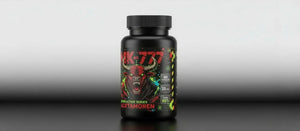
RESEARCH PCT 60 CAPSULES
Sold under a product name, not a single established compound. Not authorised as a medicine in the UK or EU. Supplied for laboratory research use only — read the evidence section below before you decide.
WHAT IS
ACTUALLY KNOWN
We would rather you bought with your eyes open than not at all. Here is the state of the evidence, including the parts that do not help us.
What it is
This is a formulated support product. Sold under a product name, not a single established compound.
State of the evidence
There is no clinical literature under this product name.
Known risks
A product marketed for endocrine recovery is not a substitute for medical care. If your hormones are suppressed, that needs blood work.
Regulatory status
Not authorised as a medicine in the UK or EU.
Status in sport
Several compounds used in post-cycle protocols are on the WADA Prohibited List.
What we verify
Identity and purity, per batch, by a laboratory we do not own. We verify what is in the capsule — nothing about what it does.
SPEC SHEET
What is in the bottle, and what is on the certificate.
Product designation
Sold under a product name rather than a single established compound name.
Bottle contents
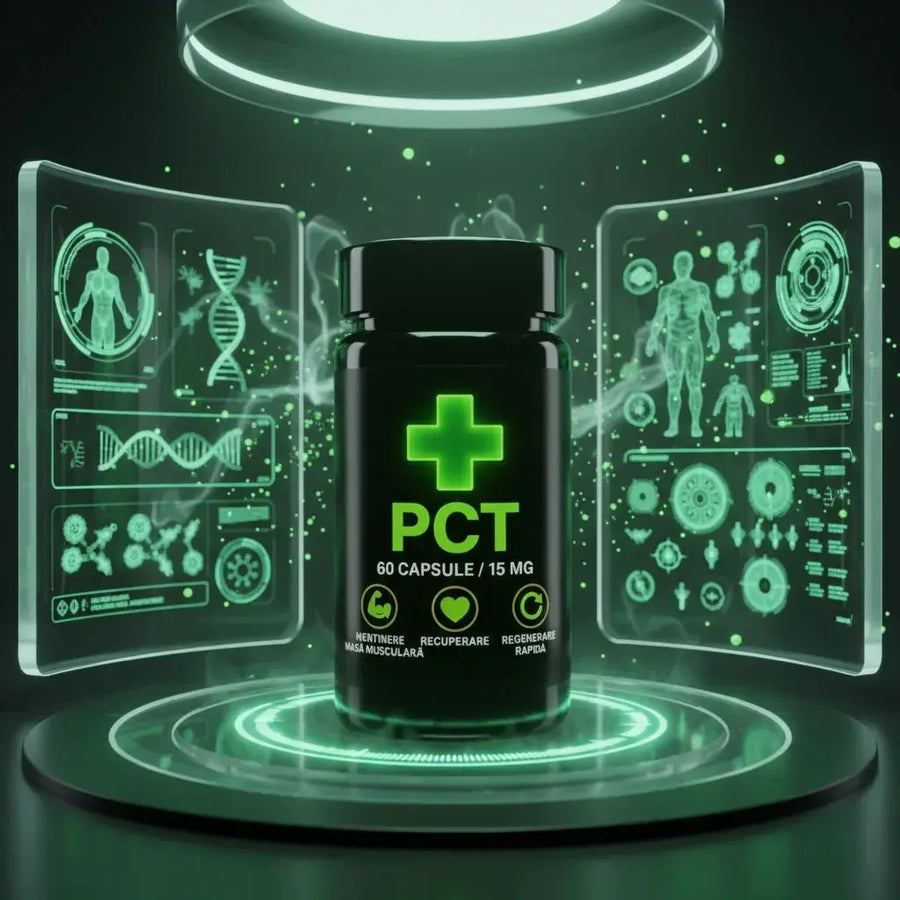
Each bottle contains 60 capsules.
Research use only
We do not publish a human dosing schedule for this compound.
Independently assayed
Each batch is assayed by Janoshik Analytical, an independent laboratory. The Certificate of Analysis for your batch is available on request.
This product is supplied for laboratory research use only. We do not provide dosing instructions, cycle lengths or post-cycle protocols for human use.
PCT
Tax included · assayed per batch
WHAT WE CAN
PROVE
We don't have customer reviews to show you yet, and we're not going to invent any. Here is what we can actually put in front of you instead.
Assayed by a lab we don't own
Batches go to Janoshik Analytical, an independent testing laboratory. We don't choose the result.
Tested per batch, not per year
A certificate from a batch made two years ago says nothing about the pack in your hand.
Batch number on the pack
Email it to us with the product name and we'll send the Certificate of Analysis for that batch.
QUESTIONS, ANSWERED
Sold under a product name, not a single established compound. There is no clinical literature under this product name.
This product is supplied for laboratory research use only. We do not provide dosing instructions, cycle lengths or post-cycle protocols for human use.
We cannot tell you that, and nobody selling you a capsule should. Suppressed testosterone is diagnosed with a blood test and managed by a clinician.
Yes — identity and purity, per batch, by Janoshik Analytical. Email us the batch number from your pack and we will send that batch's Certificate of Analysis. You do not need to have bought anything to ask.
Sold as a research compound for laboratory and educational use. Not a medicine; not evaluated by the MHRA, EMA or FDA; not intended to diagnose, treat, cure or prevent any disease. Not for human consumption. Not for use by anyone under 18 or by women who are pregnant or breastfeeding.
COMPOUND MONOGRAPH
PCT blends in the UK: buying, legal status and what to check
"PCT" is shorthand for post-cycle therapy, a term from bodybuilding forums for attempts to restore the body's own testosterone production after a course of anabolic steroids or SARMs has suppressed it. Searches for PCT supplements or PCT tablets in the UK mix three very different things: prescription medicines used by clinicians for diagnosed hypogonadism, food supplements sold with vague hormone claims, and research products like this one. Free Muscle PCT is a product designation: a formulated research product sold under a name, not a single established compound, and there is no clinical literature published under that name. Its ingredients are not listed in this text: the label and the batch certificate are the references for what a bottle contains.
The product is not a licensed medicine, is not an authorised food supplement, and is supplied by FreeMuscle LTD of Scunthorpe to adults aged 18 or over for laboratory research only. A trustworthy UK listing for any blend should state the pack size, offer a certificate of analysis for the specific batch, and make no promise of hormonal outcomes. This listing is a bottle of 60 capsules, and every Free Muscle batch is assayed by Janoshik Analytical, an independent laboratory, with the certificate for a batch sent on request by email. That certificate, read alongside the label, is the authoritative statement of what the capsules contain. Orders ship in plain packaging with free tracked UK delivery, EU delivery takes three to seven working days, and unopened items may be returned within 30 days; see shipping and guarantee.
One thing a listing should never do is stand in for a doctor. Suppressed testosterone is diagnosed with a blood test and managed by a clinician. We do not give post-cycle advice, and the question belongs in a consultation with a doctor, not on a product page.
Capsules compared with other forms
Multi-component products are sold as capsules, tablets, liquids and loose powders, and for a blend the form matters more than for a single compound. A capsule holds a weighed fill of the finished mixture, so every component is fixed in proportion at manufacture and can be assayed together. A liquid blend can separate, with components of different solubility settling at different rates, so the top and bottom of a bottle may not match. A powder blend depends on how thoroughly it was mixed and on access to a balance capable of weighing small quantities accurately. Tablets add binders and compression, which complicates assay. None of this is a statement about what any form does; it is about whether a certificate can describe the unit in your hand.
PCT blend compared with enclomiphene
Enclomiphene is the compound most often searched alongside PCT products, and the comparison shows the difference between a compound and a designation. Enclomiphene is a single, defined molecule, the trans isomer of clomifene, a selective oestrogen receptor modulator that blocks oestrogen feedback in the hypothalamus. It has controlled human trials in men with diagnosed secondary hypogonadism, discussed on the enclomiphene collection page, and a regulatory history: it has not been approved as a medicine in the UK, the EU or the United States. A PCT blend has no molecule-level literature, because it is a product name. Its evidence base is whatever exists for each component, and the certificate of analysis is the only way to know what those components are.
On regulation, neither is a licensed medicine or an authorised supplement in the UK or EU. On sport, selective oestrogen receptor modulators and aromatase inhibitors are prohibited by WADA at all times under section S4, so any blend containing them is prohibited, and a competitor would need to check every identified component against the current list.
Reading the certificate of analysis for this product
For a single compound, a certificate answers one question. For a blend it should answer several. Identity should name each component the laboratory found, established by HPLC retention time and mass spectrometry against reference standards. Content should give the quantity of each identified component per capsule, not a single combined figure. Purity for a blend is less informative than for a single compound, because the components are deliberately mixed; what matters is whether unexpected peaks appear. The batch number must match the label and the test date shows the age of the result.
If a component appears on a label but not on the certificate, it was not tested for and its presence is unconfirmed. If the certificate shows a component that does not appear on a label, the label is incomplete. Free Muscle makes no ingredient claims in this text; the label and the batch certificate are the references, and the certificate is sent on request to anyone who emails the batch number and product name. Our guides to reading a certificate of analysis and to Janoshik Analytical explain each field, and the lab tests page shows how batches are handled.
Detection, sport and testing
Because the product is a designation, its anti-doping status is that of its components. The compounds commonly associated with post-cycle protocols fall into WADA section S4, hormone and metabolic modulators: aromatase inhibitors, anti-oestrogens and selective oestrogen receptor modulators are all prohibited at all times, in and out of competition. Doping-control laboratories routinely screen urine for these classes, so any such component should be treated as detectable, with the window not established in literature we have verified. An athlete subject to testing should assume this product is prohibited and should check each component named on its certificate against the current Prohibited List.
Storage, stability and handling
Keep the bottle sealed in a cool, dry place away from light and heat, and reseal promptly after opening; capsule shells absorb moisture. Do not decant into unlabelled containers, and keep the batch number with the material so that the certificate can always be matched to it. Store out of reach of children and pets. Handle as laboratory material: wash hands after contact, avoid dust if a capsule is opened, and dispose of unwanted stock through a chemical waste route rather than household bins or drains. A certificate describes the batch on its test date, not a bottle stored badly for months.
What the published research reports
There is no published study of this product or of any PCT blend as a product. The relevant literature is about the category. An analysis of the five top-listed testosterone-boosting supplements on a major online retailer found 19 unique ingredients and 191 studies of the 10 most common ones, only 19 per cent of them in humans; of the 37 human studies, 30 per cent reported a rise in testosterone, 3 per cent a fall, 46 per cent no effect and 22 per cent were indeterminate (Balasubramanian 2019). A review of 50 such products found that 90 per cent claimed to boost testosterone, while published data showing an increase existed for only 24.8 per cent; 13 products exceeded US upper intake levels for zinc, vitamin B3 or magnesium (Clemesha 2020). On the underlying problem, a review of anabolic steroid-induced hypogonadism was intended as a meta-analysis but found no studies that met its quality criteria, and recommended complete endocrine and metabolic assessment by a clinician (Rahnema 2014). A cross-sectional study of 24 former long-term steroid users found that the 19 not receiving testosterone treatment had significantly lower testosterone and smaller testicular volume than 36 non-using weightlifters; five had testosterone below 200 ng/dl after 3 to 26 months of abstinence, and 29 per cent of the whole group had had a major depressive episode during withdrawal (Kanayama 2015). A product name is not evidence, and suppression is a medical matter. None of this is a claim about the product on this page.
References
- Balasubramanian A, et al. Testosterone Imposters: An Analysis of Popular Online Testosterone Boosting Supplements. J Sex Med. 2019;16(2):203-212. PMID: 30770069.
- Clemesha CG, Thaker H, Samplaski MK. 'Testosterone Boosting' Supplements Composition and Claims Are not Supported by the Academic Literature. World J Mens Health. 2020;38(1):115-122. PMID: 31385468.
- Rahnema CD, et al. Anabolic steroid-induced hypogonadism: diagnosis and treatment. Fertil Steril. 2014;101(5):1271-1279. PMID: 24636400.
- Kanayama G, et al. Prolonged hypogonadism in males following withdrawal from anabolic-androgenic steroids: an under-recognized problem. Addiction. 2015;110(5):823-831. PMID: 25598171.
Glossary
- PCT: post-cycle therapy, a forum term for attempts to restore hormone production after suppressive compounds.
- Product designation: a trade name for a formulated product, as opposed to an established compound name.
- HPG axis: the hypothalamus, pituitary and gonads, the signalling chain that controls testosterone.
- LH and FSH: luteinising hormone and follicle-stimulating hormone, the pituitary signals to the testes.
- SERM: selective oestrogen receptor modulator, such as enclomiphene or clomifene.
- Aromatase inhibitor: a compound that blocks conversion of androgens to oestrogens.
- Hypogonadism: clinically low testosterone, diagnosed by blood tests and symptoms.
- ASIH: anabolic steroid-induced hypogonadism.
- Certificate of analysis (COA): a laboratory report of what a batch contains.
- Batch number: the code on the pack that ties it to one production run and one certificate.
Related compounds and reading
- PCT Blends collection and Enclomiphene, the single compound most often compared with PCT products.
- SARMs, the compounds that most often prompt the question, and every Free Muscle-brand product.
- Why post-cycle therapy (PCT) matters
- What are SARMs? The 2026 research guide
- How to read a certificate of analysis
- What is Janoshik Analytical?
Free Muscle PCT is a formulated research product supplied for laboratory research use only. It is not a licensed medicine, has not been evaluated by the MHRA, EMA or FDA, and is not for human consumption. Adults aged 18 and over only. Nothing on this page is medical, hormonal or dosing advice.