BioLab Metabolic Boost (SLU-PP-332) 100 mcg, 60 caps is the lowest-strength BioLab listing of SLU-PP-332, labelled at 100 mcg (0.1 mg) per capsule, 60 capsules per pack. "Metabolic Boost" is the manufacturer's trade name, not a description of any effect, and we make no claim that this product does anything in people. It is supplied through the Muscle Market range for laboratory research only, is not for human consumption, and is sold to adults aged 18 and over.
About SLU-PP-332
SLU-PP-332, also written SLU PP 332, is a synthetic pan-agonist of the oestrogen-related receptors ERR alpha, beta and gamma. These are orphan nuclear receptors, unrelated to the oestrogen receptor despite the name, that regulate mitochondrial biogenesis and oxidative metabolism in muscle and heart. It was developed by Thomas Burris, John Walker and colleagues, the SLU prefix referring to Saint Louis University, and was first reported as an ERR agonist in 2023. It is behind the exercise-in-a-pill headlines of the last few years.
| Identifier | SLU-PP-332 |
|---|---|
| CAS number | 303760-60-3 |
| Molecular formula | C18H14N2O2 |
| Molecular weight | 290.3 g/mol |
| IUPAC name | 4-hydroxy-N-[(E)-naphthalen-2-ylmethylideneamino]benzamide |
| InChIKey | RNZIMBFHRXYRLL-XDHOZWIPSA-N |
| PubChem CID | 5338394 |
Chemically it is an acyl hydrazone: a 4-hydroxybenzoyl unit joined to a naphthalene ring through a carbon-nitrogen double bond. It is a small organic molecule, not a peptide, although shops and search engines often file it under peptides.
What the published research reports
In the 2023 ACS Chemical Biology paper, SLU-PP-332 increased mitochondrial function and cellular respiration in a skeletal muscle cell line. Mice given the compound showed more type IIa oxidative muscle fibres, a gene expression pattern in muscle resembling the acute response to aerobic exercise, and greater running endurance; the authors reported that ERR alpha activation was critical for the endurance effect. A 2024 follow-up in diet-induced obese and genetically obese (ob/ob) mice reported increased energy expenditure and fatty acid oxidation, less fat mass accumulation and improved insulin sensitivity. Authors of both papers declared shareholdings in a company developing ERR-based therapeutics.
In a 2026 paper the same group described a chemically distinct successor, SLU-PP-915, and stated plainly that SLU-PP-332 improves aerobic performance in mice but lacks oral bioavailability; the newer molecule was characterised because it is active by mouth. In that paper SLU-PP-332 was given by intraperitoneal injection, and it too carries a declared conflict of interest: the senior author is named as inventor on the university's intellectual property covering SLU-PP-915 and holds shares in companies developing ERR agonists. There is no human data of any kind, no human pharmacokinetic study, and no safety study in people. It is one of the newest compounds in this market and one of the least characterised. Nothing above is a claim about this product.
This listing
- Manufacturer: BioLab
- Compound: SLU-PP-332
- Form: Capsules
- Pack size: 60 capsules
- Strength: 100 mcg (0.1 mg) per capsule, as stated by the manufacturer
- Total in pack: 6 mg (100 mcg x 60 capsules)
- Batch certificate of analysis: shown where BioLab supplies one for the batch we hold
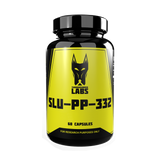
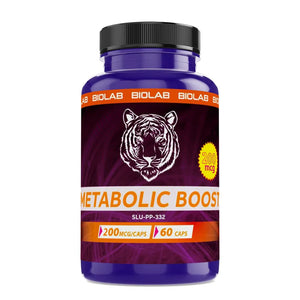
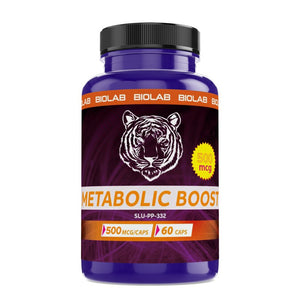
BioLab also lists the compound at 200 mcg per capsule (12 mg per pack) and 500 mcg per capsule (30 mg per pack), each in 60 capsules, and Thoroughbred Labs SLU-PP-332 is a separate 60-capsule listing whose manufacturer data do not state a per-capsule strength. Total milligrams per pack is the fair basis for comparison; our price per milligram guide sets out the method.
SLU-PP-332 in the UK: buying, legal status and what to check
Searches such as "SLU PP 332 UK buy", "UK source" and "UK reviews" ask two things: what the law allows, and how to tell a documented listing from an undocumented one.
The legal position
SLU-PP-332 is not a licensed medicine in the UK, has not been assessed by the MHRA, and is not an authorised food supplement or novel food. It is not a controlled drug. No licensed medicine containing it exists anywhere, so it is not something a UK pharmacy supplies as a medicine, and listings on general marketplaces that present it as a supplement describe something it cannot lawfully be sold as. What remains is supply for laboratory research to adults aged 18 and over, which is the only basis for this listing; it is not for human consumption. In sport it is prohibited at all times: as a substance with no current approval for human therapeutic use it is caught at minimum by WADA section S0 (non-approved substances), and anti-doping scientists describe exercise mimetics and metabolic modulators as prohibited. Anyone subject to anti-doping rules should consult the current list. Our research guide covers the wider legal picture.
What a documented UK listing shows
- A named manufacturer and a reachable UK seller, so there is someone accountable for the pack.
- Strength per capsule with its unit, micrograms or milligrams, plus the capsule count, so the total can be checked. Confusing mcg with mg is a thousand-fold error.
- A lot number on the container and a certificate carrying the same number, or a plain statement that none is held.
- Research-use terms: 18+ only, no directions for use, and no talk of fat loss or endurance. Calling SLU-PP-332 an "exercise pill" is a claim no regulator has assessed.
How this listing compares
FreeMuscle LTD is a UK company based in Scunthorpe. Every UK order travels by free tracked delivery in plain packaging, orders placed before 2pm Monday to Friday are processed the same working day, EU delivery takes 3-7 working days, and unopened items may be returned within 30 days (delivery, returns). BioLab is named and states a strength, so the total per pack can be worked out. The certificate point depends on what BioLab has supplied for the batch in stock, covered below. We do not publish outcome reports. A fuller checklist is in how to choose a UK supplier.
Capsules compared with other forms
"SLU-PP-332 capsules" and "SLU-PP-332 injectable" are both common searches, and the published literature bears directly on the difference. Every in vivo result summarised above came from mice given the compound by injection. The developers themselves describe SLU-PP-332 as lacking oral bioavailability, which is why they went on to make SLU-PP-915. No study has measured what swallowed SLU-PP-332 does in an animal or a person, so we make no comparison of forms on effect.
The oral-peptide argument does not apply here. SLU-PP-332 is not broken down by digestive proteases, because it is not a peptide; the developers report a bioavailability problem without, in the abstract, giving its cause. For peptides the issue is different, as our article do oral peptides work explains.
Where the forms do differ measurably is content and stability:
- Capsules at 100 mcg hold a very small quantity of active blended into a much larger mass of filler. Content per capsule depends on how evenly that blend was mixed, which is why a content-per-capsule result on the certificate matters more at micrograms than at milligrams.
- Liquids and injectable research products rely on the compound staying dissolved and intact in the solvent. An acyl hydrazone sitting in water is exposed to hydrolysis, and each measured volume is only as accurate as the pipette.
SLU-PP-332 compared with cardarine
Cardarine (GW-501516) is the related compound most often searched alongside SLU-PP-332, because both have been called exercise mimetics. They act on different nuclear receptors and have very different histories.
| Point | SLU-PP-332 | Cardarine (GW-501516) |
|---|---|---|
| Target | ERR alpha, beta and gamma (agonist) | PPAR-delta (selective agonist) |
| Formula | C18H14N2O2 | C21H18F3NO3S2 |
| Molecular weight | 290.3 g/mol | 453.5 g/mol |
| CAS number | 303760-60-3 | 317318-70-0 |
| Origin | Saint Louis University, reported as an ERR agonist in 2023 | Ligand Pharmaceuticals and GlaxoSmithKline, 1990s |
| Human data | None | Small trials of two to six weeks on blood lipids |
| Development | Academic, preclinical only | Discontinued by GSK in 2007 after rodent carcinogenicity findings |
| UK status | Unlicensed research compound | Unlicensed research compound |
| WADA | Prohibited at all times (S0 non-approved substances at minimum) | S4, metabolic modulators (PPAR-delta agonists) |
On mechanism, both receptors sit in the cell nucleus and switch on genes for fat oxidation and mitochondrial function in muscle, but they are separate proteins with separate ligands, so one compound is not a variant of the other. On evidence, cardarine is the better documented and the more troubling: its short human trials measured changes in blood lipids, and its pharmaceutical development stopped after long-term rodent studies reported tumours in several organs. WADA issued a public warning about it in 2013. SLU-PP-332 has no human trials, no long-term toxicology and only a handful of mouse papers, so its absence of reported harms reflects an absence of study, not a clean record.
On regulation they converge: neither is licensed in the UK, neither may be sold for consumption, and both are prohibited at all times in sport, under different sections of the WADA list. No head-to-head study exists, and we do not rank research compounds by effect. The brands held are in the cardarine collection, and the full development history is in cardarine (GW-501516): why development stopped.
Reading the certificate of analysis for this product
BioLab is a third-party brand in the Muscle Market range, so the testing position differs from our own label. Every Free Muscle-brand batch is assayed by Janoshik Analytical, an independent laboratory, with the certificate sent on request by email. For BioLab products we show a certificate of analysis only where the manufacturer supplies one for the specific batch we hold. A generic PDF with no batch number is not a batch certificate, and we do not present one as such. You can contact us with the product name and lot number to ask what is held for that batch. When a BioLab certificate is available, these are the lines to read:
- Identity. HPLC confirms identity only indirectly, by matching a peak's retention time to a reference standard. LC-MS is firmer: SLU-PP-332 has a monoisotopic mass of about 290.11, so the protonated molecule should appear near m/z 291.1.
- Purity (%). The share of the chromatogram taken by the main peak. For a hydrazone, small extra peaks can be the other geometric isomer or breakdown products (4-hydroxybenzohydrazide and 2-naphthaldehyde), which is useful context when purity falls short of the headline figure.
- Content per capsule. The line that tests the 100 mcg label. A purity figure alone says nothing about how much compound each capsule holds.
- Batch number. It must match the lot printed on the pack you have.
- Laboratory and test date. They show who ran the analysis and how old the result is.
A missing field has a plain meaning. No identity result means nothing independent confirms the compound; no content result leaves the stated strength unverified; a different batch number means the certificate describes other material. Contact us with the lot number, and see how to read a certificate of analysis and our lab tests page.
Detection, sport and testing
SLU-PP-332 is prohibited at all times in sport (section S0 at minimum), and the anti-doping community has already started work on finding it. In a 2026 study from the UCLA Olympic Analytical Laboratory, researchers incubated the compound with pooled human liver S9 fractions and used liquid chromatography with high-resolution mass spectrometry to identify 22 metabolites: mono- and dihydroxylated forms, reduced dihydroxylated forms, and glucuronide and sulfate conjugates, some with hydroxylation of the naphthalene or phenolic ring. They named eight of the most abundant as candidate targets for doping control and noted that further work is needed to confirm the structures.
That is an in vitro result. No human excretion study of SLU-PP-332 has been published, so the accurate statement is: detectable in principle, window not established. Under strict liability an athlete is responsible for any prohibited substance found in their sample, whatever its source, so anyone subject to testing should treat any exposure as reportable. The current list and any updates are published by WADA each year.
Storage, stability and handling
No stability study of SLU-PP-332 capsules has been published, so the manufacturer's printed expiry, where there is one, is the only stated limit. The chemistry still points to sensible practice. The hydrazone link is the part of the molecule most open to attack by water, and the reaction is faster in acidic conditions, so moisture is the first thing to keep out. The conjugated naphthalene system absorbs ultraviolet light, and compounds with this kind of carbon-nitrogen double bond can switch between geometric isomers under light, so the container should stay closed and out of sunlight.
- Store the container shut, in its original packaging, somewhere with a steady temperature, low humidity and no direct light.
- A refrigerated container should warm up unopened first, otherwise moist air condenses on cold capsules the moment the lid comes off.
- Wear gloves for any opened capsule, keep the work area free of food and drink, and store the pack where children and pets cannot reach it.
- Treat spent capsules and packaging residues as chemical waste rather than household rubbish or drain waste.
Glossary
- Oestrogen-related receptors (ERR): three nuclear receptors, alpha, beta and gamma, that control genes for energy metabolism; they do not bind oestrogen.
- Orphan nuclear receptor: a receptor whose endogenous activating ligand was unknown when it was discovered.
- Pan-agonist: a compound that activates every member of a receptor family rather than one subtype.
- Exercise mimetic: a research label for a compound that reproduces part of the molecular response to exercise in cells or animals; it is not a finding in people.
- Oral bioavailability: the fraction of a swallowed dose that reaches the circulation unchanged.
- Acyl hydrazone: the chemical group linking the two halves of SLU-PP-332, open to hydrolysis in water.
- PPAR-delta: the nuclear receptor targeted by cardarine, involved in fatty acid handling in muscle.
- S9 fraction: a liver preparation containing the enzymes that metabolise foreign compounds, used to predict metabolites.
- LC-HRMS: liquid chromatography with high-resolution mass spectrometry, which measures ion masses precisely enough to propose formulas.
Related
- All brands of SLU-PP-332 we stock, compared
- All BioLab products
- SLU-PP-332 and 5-Amino-1MQ: what the mouse data show
- 5-Amino-1MQ collection
- Batch testing and certificates of analysis
- Delivery and returns
This product is supplied for laboratory research use only. It has not been evaluated by the MHRA, EMA or FDA. It is not a medicine, not a food supplement and not for human consumption. Sold only to adults aged 18 and over. Nothing on this page is medical, dosing or usage advice, and descriptions of published studies are not claims about this product.
References
- Billon C, et al. Synthetic ERRalpha/beta/gamma Agonist Induces an ERRalpha-Dependent Acute Aerobic Exercise Response and Enhances Exercise Capacity. ACS Chem Biol. 2023;18(4):756-771. PMID: 36988910.
- Billon C, et al. A Synthetic ERR Agonist Alleviates Metabolic Syndrome. J Pharmacol Exp Ther. 2024;388(2):232-240. PMID: 37739806.
- Billon C, et al. An orally active estrogen receptor-related receptor agonist, SLU-PP-915, enhances aerobic exercise capacity. J Pharmacol Exp Ther. 2026;393(1):103787. PMID: 41421047.
- Avliyakulov NK, et al. Analysis and Identification of In Vitro Metabolites of Exercise Mimetic SLU-PP-332 ERRalpha/beta/gamma Agonist for Doping-Control Purposes. Drug Test Anal. 2026;18(3):439-450. PMID: 41688415.
Frequently asked questions
Is SLU-PP-332 legal in the UK?
SLU-PP-332 is not a licensed medicine in the UK and is not an authorised food supplement. It is not a controlled drug. It may be sold to adults for laboratory research, which is the only basis for this listing. It is not for human consumption and nothing on this page is medical or dosing advice.
Is SLU-PP-332 a SARM?
No. SLU-PP-332 is an agonist of the oestrogen-related receptors ERR alpha, beta and gamma. It has no described activity at the androgen receptor and it is not a steroid. It is often listed beside SARMs and metabolic modulators such as Cardarine because it was studied for endurance in mice.
Has SLU-PP-332 been tested in humans?
No. Every published study of SLU-PP-332 is in mice or in laboratory preparations such as cultured cells and human liver fractions, and it was first reported as an ERR agonist in 2023. There are no human pharmacokinetic, safety or efficacy data, and the mouse studies used injection rather than capsules. Any claim of a human result for this compound is not based on published research.
Is SLU-PP-332 detectable in sport drug tests?
SLU-PP-332 is prohibited at all times in sport: substances with no approval for human therapeutic use fall under WADA section S0, and exercise mimetics are also treated as metabolic modulators. An anti-doping laboratory has published its in vitro metabolites for doping control, but no detection window has been established. Anyone subject to anti-doping rules should treat it as prohibited and check the current list.
What strength of SLU-PP-332 should I choose?
We do not advise on strength, quantity or use. Muscle Market products are sold for laboratory research only and are not for human consumption. This listing states 100 mcg per capsule as printed by BioLab, so that researchers can compare total milligrams per pack between listings.
What are the side effects of SLU-PP-332?
No one can answer this for people, because SLU-PP-332 has never been studied in humans. The published work is a small number of short mouse and cell studies that were not designed to characterise toxicity, and there is no long-term safety or human pharmacokinetic data. An absence of reported harms reflects an absence of study. We make no claims about effects of any kind.
Is SLU-PP-332 a peptide?
No. Although it is often listed under peptides, SLU-PP-332 is a small synthetic organic molecule, an acyl hydrazone with the formula C18H14N2O2 and a molecular weight of about 290 g/mol. Peptides are chains of amino acids. The distinction matters for analysis and storage: a certificate for this compound should show a mass near m/z 291 by LC-MS, not a peptide sequence.
What is the difference between SLU-PP-332 capsules and injectable SLU-PP-332?
The mouse studies gave SLU-PP-332 by injection, and its developers have stated that it lacks oral bioavailability. No study has measured what happens when it is swallowed, and no human half-life has been published. We therefore make no comparison of effect between forms. The measurable differences are content per unit and stability, since a hydrazone in solution is exposed to hydrolysis.
What is the difference between SLU-PP-332 and MOTS-c?
They are unrelated. MOTS-c is a short peptide encoded in mitochondrial DNA, whereas SLU-PP-332 is a small synthetic molecule that activates the oestrogen-related receptors. Both have been discussed as exercise mimetics in animal research, but they work through different pathways, no human comparison exists, and neither is licensed as a medicine. We make no claims about either compound.
What is the SLU-PP-332 dosage per day, and are there before and after results?
We do not publish dosage, cycle, stacking or outcome guidance for any research compound, and we do not share before and after reports. SLU-PP-332 is sold for laboratory research only, is not for human consumption, and has no human data from which any such figure could be drawn. Descriptions of mouse studies on this page are not claims about the product.
Related research and listings
Same compound, other brands See all 4 →
More from BioLab See all 4 →
Supplied for laboratory and research use. Not for human consumption. Not an approved medicine, and nothing above is dosing advice. You must be 18 or over to order.