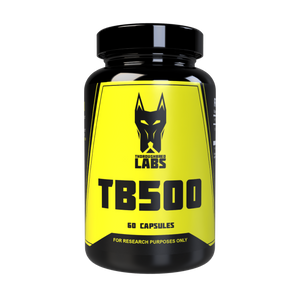
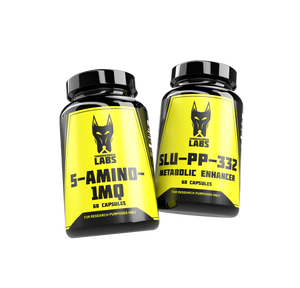
Thoroughbred Labs SLU-PP-332 is a Thoroughbred Labs listing of SLU-PP-332, supplied as 60 capsules per pack; the manufacturer does not state a strength per capsule on the label. It is supplied through the Muscle Market range for laboratory research only, is not for human consumption, and is sold to adults aged 18 and over. This page sets out what the published research on SLU-PP-332 reports, what the label documents and what it leaves out, how batch certificates are handled for Thoroughbred Labs products, and how the compound sits in UK law and in sport.
About SLU-PP-332
SLU PP 332, to give the common alternative spelling, is a synthetic compound that activates all three oestrogen-related receptors: ERR alpha, ERR beta and ERR gamma. Despite the name, these orphan nuclear receptors have nothing to do with the oestrogen receptor; in muscle and heart they control how many mitochondria cells build and how much fuel they oxidise. It came from the laboratories of Thomas Burris and John Walker, working at Saint Louis University and partner institutions, and its first full characterisation was published in 2023. It is the molecule behind recent exercise-in-a-pill headlines.
| Identifier | Value |
|---|---|
| PubChem CID | 5338394 |
| CAS number | 303760-60-3 |
| Molecular formula | C18H14N2O2 |
| Molecular weight | 290.3 g/mol |
| Systematic name | 4-hydroxy-N-[(E)-naphthalen-2-ylmethylideneamino]benzamide |
| InChIKey | RNZIMBFHRXYRLL-XDHOZWIPSA-N |
Although it is sold beside peptides, SLU-PP-332 is a small organic molecule with no amino acids in it.
What the published research reports
The first paper, in ACS Chemical Biology in 2023, reported that the compound increased mitochondrial function in a muscle cell line and, in mice, increased the proportion of oxidative type IIa muscle fibres and treadmill endurance; the authors reported that activation of ERR alpha specifically was critical for the endurance effect. In 2024 the group followed with diet-induced obese and ob/ob mice, reporting higher energy expenditure and fatty acid oxidation, less fat mass and improved insulin sensitivity. Three of the authors of the first paper declared shareholdings in a company working on ERR-based therapeutics.
Two further mouse studies looked beyond muscle. In a 2024 Circulation paper, a Baylor College of Medicine team tested SLU-PP-332 and a second agonist, SLU-PP-915, in mice with heart failure induced by pressure overload; both compounds were associated with higher ejection fraction, less fibrosis and longer survival, and genetic experiments pointed to ERR gamma as the main mediator. One author declared a co-founder role in a company developing such compounds. In a 2023 study in the American Journal of Pathology, 21-month-old mice treated for eight weeks showed reversal of age-related albuminuria, podocyte loss and inflammatory markers in the kidney. Both are disease models in animals, not evidence about healthy people.
There is no human data of any kind, no human pharmacokinetic study, and no safety study in people. It is one of the newest compounds in this market and one of the least characterised. Nothing above is a claim about this product.
This listing
- Manufacturer: Thoroughbred Labs
- Compound: SLU-PP-332
- Form: Capsules
- Pack size: 60 capsules
- Strength: the manufacturer does not state the amount per capsule on the label, so we do not list one
- Batch certificate of analysis: shown where Thoroughbred Labs supplies one for the batch we hold
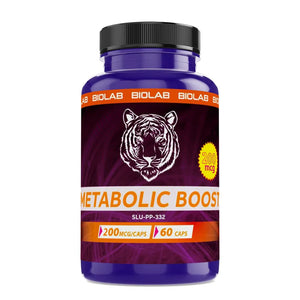
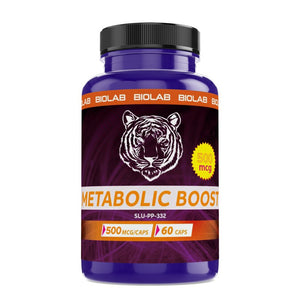
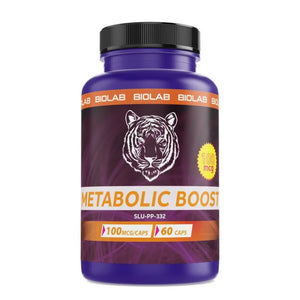
Because no strength is stated, the total quantity in the pack cannot be worked out from the label, and this listing cannot be compared with the BioLab 100 mcg, 200 mcg or 500 mcg listings on milligrams per pack. Thoroughbred Labs also sells SLU-PP-332 in a two-product pack with 5-Amino-1MQ, listed separately as the Research System; each compound in it is a separate research substance, and we make no claim about using them together.
SLU-PP-332 in the UK: buying, legal status and what to check
Where the law stands
SLU-PP-332 is not a licensed medicine in the UK, has not been assessed by the MHRA, and is not an authorised food supplement. It is not a controlled drug under the Misuse of Drugs Act. No medicine containing it has been approved by any regulator, so no UK prescriber or pharmacy can supply it as a treatment, and any listing that sells it as a supplement, a slimming aid or an endurance product is describing something it cannot lawfully be. It may be sold to adults for laboratory research, which is the only basis for this listing. It is not for human consumption. In sport it is prohibited at all times under WADA section S0, covered below. Our research guide covers the wider legal picture for research compounds.
Signs of a documented listing
- A manufacturer is named on the pack and on the page, and the UK seller can be contacted.
- The stated strength per capsule, with its unit, appears on the label, or the seller says openly that none is stated, as we do here.
- A lot number is printed on the tub, and any certificate offered carries that same number.
- The listing gives no directions for use, no quantities per day and no promised outcomes; research-use and 18+ terms are stated.
- Delivery is tracked, the packaging is plain, and the returns terms are published.
How this listing measures up
The manufacturer is named, and the missing strength is stated plainly rather than filled with a guess. The certificate position depends on what Thoroughbred Labs has supplied for the batch in stock, and a certificate is shown only where one is held for that batch. FreeMuscle LTD is a UK company based in Scunthorpe. UK orders go by free tracked delivery in plain packaging, orders placed before 2pm Monday to Friday are processed the same working day, EU delivery takes 3-7 working days, and unopened items can be returned within 30 days (see delivery and returns). The UK supplier checklist goes into more detail.
Capsules compared with other forms
Searches for "SLU-PP-332 capsules" and "SLU-PP-332 injectable" ask whether form matters. No published study reports results for SLU-PP-332 given as a swallowed capsule. In a 2026 paper its developers stated that SLU-PP-332 lacks oral bioavailability, and they described a chemically distinct agonist, SLU-PP-915, as orally bioavailable in mice. How much of a capsule's content would survive digestion and absorption in any species has not been measured, so we draw no conclusion about form and effect.
Peptides face a different problem: protein-digesting enzymes in the gut break most of them down, as our article do oral peptides work explains. That argument does not transfer to SLU-PP-332, which is not a peptide; its limitation, as the developers describe it, is a lack of oral bioavailability. The hydrazone link can also be split by acid and water, a point that bears on stomach conditions and on storage alike.
The forms do differ in ways that can be measured on the bench:
- Capsules contain a weighed fill of powder, usually the active blended with an inert carrier. The quantity per capsule depends on the fill weight and the evenness of the blend, and here, with no label strength, only a content assay can say what it is.
- Solutions are measured by volume. Their accuracy depends on the compound staying dissolved and chemically intact, and a hydrazone held in water is exposed to slow hydrolysis.
SLU-PP-332 compared with Cardarine
The related compound people search for most often next to SLU-PP-332 is Cardarine (GW-501516). Both are nuclear-receptor agonists that changed running capacity in mice, hence the shared exercise mimetic label, but their receptors, chemistry and histories differ.
| Feature | SLU-PP-332 | Cardarine (GW-501516) |
|---|---|---|
| Receptor | ERR alpha, beta and gamma | PPAR-delta |
| Chemical class | Acyl hydrazone | Phenoxyacetic acid with a thiazole ring |
| Formula and mass | C18H14N2O2, 290.3 g/mol | C21H18F3NO3S2, 453.5 g/mol |
| Developed by | University researchers, first paper 2023 | Pharmaceutical industry, around 2000 |
| Human studies | None | Short early-phase trials, mostly on blood lipids |
| Long-term toxicology | Not published | Rodent cancer findings; development stopped in 2007 |
| WADA section | Prohibited at all times; S0 at minimum as a non-approved substance | S4, hormone and metabolic modulators |
Mechanism. ERRs and PPAR-delta both belong to the nuclear receptor superfamily and both switch on genes for fat oxidation and mitochondrial capacity in muscle, but they are separate proteins with separate binding pockets. Neither compound is a variant of the other.
Evidence. Cardarine has the longer record. It reached small human trials measuring blood lipids, and its commercial development ended after long-term rodent studies found tumours in several tissues. SLU-PP-332 has a handful of mouse and cell papers and no human or long-term toxicology data at all. Fewer reported problems for the newer compound reflect how little it has been studied, not a better profile.
Regulation. In the UK both are unlicensed and may be sold only for research to adults. In sport both are prohibited at all times, under different sections of the WADA list. No study has compared the two directly, and we do not rank research compounds by effect. Its history is in what happened in Cardarine's development, and a Thoroughbred Labs GW-501516 listing is also stocked.
Reading the certificate of analysis for this product
Batches sold under the Free Muscle name are each assayed by Janoshik Analytical, an independent laboratory, and the certificate is emailed on request. Thoroughbred Labs is a third-party manufacturer, so a certificate appears here only when Thoroughbred Labs has supplied one for the exact batch on our shelf. A PDF without a batch number does not qualify, and we will not pass one off as a batch certificate. You can contact us with the product name and lot number to ask what is held for that batch. For this listing it is the only document that could put a figure on the content of each capsule. Fields to look for:
- Identity method. HPLC with UV detection matches a peak to a reference standard by retention time, which is indirect. LC-MS adds the mass: SLU-PP-332 has a monoisotopic mass of about 290.1, so the protonated ion should appear close to m/z 291.
- Purity as a percentage. The main peak's share of the total signal. Secondary peaks may be the other geometric isomer of the hydrazone or its hydrolysis products, the parent hydrazide and aldehyde.
- Amount per capsule. The line that answers the question the label leaves open. Without it, purity alone says nothing about quantity.
- Batch or lot number. It should match the number on the tub in front of you.
- Laboratory name and test date. These tell you who did the work and whether the result is recent.
Each gap has a specific meaning. With no identity line, nothing independent confirms the compound; with no content line, the quantity per capsule remains unknown for this product; with a batch number that does not match, the document describes different material. Contact us with your lot number, and see how to read a certificate of analysis and our lab tests page for a worked example.
Detection, sport and testing
As a substance with no current approval for human therapeutic use, SLU-PP-332 falls at minimum under WADA section S0 (non-approved substances) and is prohibited at all times in sport; the list also has a section for hormone and metabolic modulators, so check the current edition for any specific entry. Anti-doping laboratories have already published in vitro work on its detection. In a 2026 study, a Los Angeles doping-control laboratory incubated the compound with pooled human liver S9 fractions and used liquid chromatography with high-resolution mass spectrometry to identify 22 metabolites, hydroxylated and glucuronide or sulfate conjugated forms among them, several of which the authors proposed as candidate targets for doping control. They noted that further work is needed to confirm the structures.
No study has measured how long SLU-PP-332 or its metabolites remain in human urine or blood, because it has never been given to people under study conditions. The correct summary is that it is detectable in principle and that no detection window has been established. Under strict liability, an athlete answers for any prohibited substance in a sample. Anyone subject to anti-doping rules should consult the current list, which WADA revises every year.
Storage, stability and handling
Thoroughbred Labs has not published stability data for these capsules, and no independent stability study of SLU-PP-332 exists, so any expiry date printed on the tub is the only stated limit. The structure of the molecule still indicates what to avoid. The hydrazone bond is the weak point: water can cleave it back to its two starting materials, and acid speeds the reaction. The extended aromatic system absorbs ultraviolet light, which can convert the molecule between its two geometric forms.
- Keep the tub sealed, in its original container, in a cool, dry and dark place with a steady temperature, away from radiators, sunlight and steamy rooms.
- A chilled tub should warm up with the lid on before opening, to avoid condensation.
- Handle opened capsules with gloves, away from food and drink.
- Store out of reach of children and pets, and dispose of unwanted material as chemical waste in line with laboratory good practice.
Glossary
- ERR alpha, beta and gamma: the three oestrogen-related receptors, nuclear receptors that regulate energy metabolism genes and do not bind oestrogen.
- Nuclear receptor: a protein inside the cell that binds a small molecule and then switches particular genes on or off.
- Agonist: a molecule that activates a receptor; a pan-agonist activates all members of a receptor family.
- Ejection fraction: the share of blood pumped out of the heart's main chamber with each beat, a standard measure in heart failure research.
- Albuminuria: albumin in the urine, used in animal and human studies as a marker of kidney damage.
- Hydrazone: a chemical group containing a carbon-nitrogen double bond attached to a second nitrogen, open to hydrolysis.
- LC-MS: separation by liquid chromatography followed by mass measurement, the firmer of the two usual identity tests.
- Section S0: the WADA category for pharmacological substances with no current approval for human therapeutic use.
Related
- All brands of SLU-PP-332 we stock, compared
- All Thoroughbred Labs products
- SLU-PP-332 and 5-Amino-1MQ: research guide
- 5-Amino-1MQ collection and Cardarine collection
- Batch testing and certificates of analysis
- Delivery and returns
This product is supplied for laboratory research use only. It has not been evaluated by the MHRA, EMA or FDA. It is not a medicine, not a food supplement and not for human consumption. Sold only to adults aged 18 and over. Nothing on this page is medical, dosing or usage advice, and descriptions of published studies are not claims about this product.
References
- Billon C, et al. Synthetic ERRalpha/beta/gamma Agonist Induces an ERRalpha-Dependent Acute Aerobic Exercise Response and Enhances Exercise Capacity. ACS Chem Biol. 2023;18(4):756-771. PMID: 36988910.
- Billon C, et al. A Synthetic ERR Agonist Alleviates Metabolic Syndrome. J Pharmacol Exp Ther. 2024;388(2):232-240. PMID: 37739806.
- Xu W, et al. Novel Pan-ERR Agonists Ameliorate Heart Failure Through Enhancing Cardiac Fatty Acid Metabolism and Mitochondrial Function. Circulation. 2024;149(3):227-250. PMID: 37961903.
- Wang XX, et al. Estrogen-Related Receptor Agonism Reverses Mitochondrial Dysfunction and Inflammation in the Aging Kidney. Am J Pathol. 2023;193(12):1969-1987. PMID: 37717940.
- Avliyakulov NK, et al. Analysis and Identification of In Vitro Metabolites of Exercise Mimetic SLU-PP-332 ERRalpha/beta/gamma Agonist for Doping-Control Purposes. Drug Test Anal. 2026;18(3):439-450. PMID: 41688415.
- Billon C, et al. An orally active estrogen receptor-related receptor agonist, SLU-PP-915, enhances aerobic exercise capacity. J Pharmacol Exp Ther. 2026;393(1):103787. PMID: 41421047.
Frequently asked questions
Is SLU-PP-332 legal in the UK?
SLU-PP-332 is not a licensed medicine in the UK and is not an authorised food supplement. It is not a controlled drug. It may be sold to adults for laboratory research, which is the only basis for this listing. It is not for human consumption and nothing on this page is medical or dosing advice.
Is SLU-PP-332 a SARM?
No. SLU-PP-332 is an agonist of the oestrogen-related receptors ERR alpha, beta and gamma. It has no described activity at the androgen receptor and it is not a steroid. It is often listed beside SARMs and metabolic modulators such as Cardarine because it was studied for endurance in mice.
Has SLU-PP-332 been tested in humans?
No. Every published study of SLU-PP-332 is in mice or cells, and its first full characterisation appeared in 2023. There are no human pharmacokinetic, safety or efficacy data, and its developers have reported that it lacks oral bioavailability. Any claim of a human result for this compound has no published study behind it.
Is SLU-PP-332 detectable in sport drug tests?
As a substance with no approval for human therapeutic use, SLU-PP-332 is prohibited at all times in sport, at minimum under WADA section S0. Anti-doping laboratories published work on its metabolites in 2026 to support detection, although no detection window has been established. Anyone subject to anti-doping rules should treat it as prohibited and check the current list.
What strength of SLU-PP-332 should I choose?
We do not advise on strength, quantity or use. Muscle Market products are sold for laboratory research only and are not for human consumption. We list the strength per capsule where the manufacturer prints one and say so where it does not, so that researchers can compare total milligrams per pack between listings.
What side effects does SLU-PP-332 have?
Nobody can say for people, because SLU-PP-332 has never been given to humans in a study. The published mouse and cell papers were short, were designed to look for metabolic, heart or kidney changes rather than toxicity, and include no long-term safety work. A lack of reported harms reflects a lack of study. We make no claims about effects of any kind.
Is SLU-PP-332 a peptide?
No. It is often listed under peptides for convenience, but SLU-PP-332 is a small synthetic molecule, a hydrazone with the formula C18H14N2O2 and a mass of about 290 g/mol. It contains no amino acids. That is why its certificate of analysis should report identity by chromatography and mass, not by peptide sequence.
Are SLU-PP-332 capsules different from injectable SLU-PP-332?
No published study reports results for SLU-PP-332 given as a capsule, and its developers stated in 2026 that it lacks oral bioavailability. No study has measured what happens to a swallowed capsule, so we make no comparison of effect. The measurable differences are how the amount per unit is fixed and how stable the compound is in each form.
What is the difference between SLU-PP-332 and MOTS-c?
They are unrelated molecules. MOTS-c is a short peptide encoded in mitochondrial DNA, while SLU-PP-332 is a synthetic small molecule that activates the oestrogen-related receptors. Both appear in animal research on exercise-like signalling, through different pathways, and neither is a licensed medicine. We do not stock MOTS-c and make no claims about either.
What is the SLU-PP-332 dosage, and are there before and after results?
We do not publish dosage, frequency, cycle, stacking or results information for any research compound, and we do not share before and after reports. SLU-PP-332 is sold for laboratory research only and is not for human consumption. There are no human studies from which any such figure could come, and the mouse research on this page is not a claim about the product.
Related research and listings
Same compound, other brands See all 4 →
More from Thoroughbred Labs See all 9 →
Supplied for laboratory and research use. Not for human consumption. Not an approved medicine, and nothing above is dosing advice. You must be 18 or over to order.