BioLab Metabolic Boost (SLU-PP-332) 200 mcg, 60 caps is a BioLab listing of SLU-PP-332, labelled at 200 mcg (0.2 mg) per capsule, 60 capsules per pack. It is supplied through the Muscle Market range for laboratory research only, is not for human consumption, and is sold to adults aged 18 and over. Below: what the published research on SLU-PP-332 reports, what the label documents, how batch certificates are handled for BioLab products, and the questions UK buyers most often ask about this compound.
About SLU-PP-332
SLU-PP-332, also written SLU PP 332, is a synthetic pan-agonist of the oestrogen-related receptors ERR alpha, beta and gamma. These are orphan nuclear receptors, unrelated to the oestrogen receptor despite the name, that regulate mitochondrial biogenesis and oxidative metabolism in muscle and heart. It was characterised as an ERR agonist by Burris, Walker and colleagues at Saint Louis University in work first reported in 2023, and it is behind the exercise-in-a-pill headlines of the last few years.
In the 2023 ACS Chemical Biology paper, the compound raised mitochondrial function in a muscle cell line, and mice given it showed more type IIa oxidative muscle fibres, an ERR alpha-specific gene programme resembling the acute response to aerobic exercise, and greater treadmill endurance; the authors reported that ERR alpha activation was critical to the endurance effect (Billon et al., 2023). Three of the authors declared shareholdings in a company developing ERR-based therapeutics. A 2024 follow-up in diet-induced obese and ob/ob mice reported higher energy expenditure and fatty acid oxidation, less fat mass accumulation and improved insulin sensitivity (Billon et al., 2024). There is no human data of any kind, no human pharmacokinetic study, and no safety study in people. It is one of the newest compounds in this market and one of the least characterised. Nothing above is a claim about this product.
Chemically it is a small molecule, not a peptide. PubChem (CID 5338394) lists it under CAS number 303760-60-3 with the formula C18H14N2O2 and a molecular weight of 290.3. Its systematic name, 4-hydroxy-N-[(E)-naphthalen-2-ylmethylideneamino]benzamide, describes a naphthalene ring joined to a 4-hydroxybenzoyl group through an acylhydrazone link. Those identifiers are what a certificate of analysis should match.
This listing
- Manufacturer: BioLab
- Compound: SLU-PP-332
- Form: Capsules
- Pack size: 60 capsules
- Strength: 200 mcg (0.2 mg) per capsule, as stated by the manufacturer
- Total in pack: 12 mg (200 mcg x 60 capsules)
- Batch certificate of analysis: shown where BioLab supplies one for the batch we hold
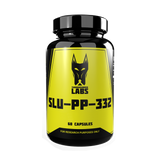
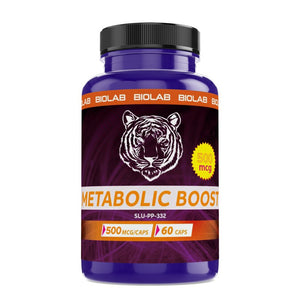
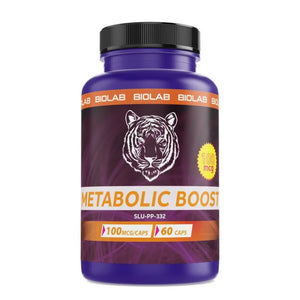
BioLab also lists the same compound at 100 mcg and 500 mcg per capsule, giving 6 mg and 30 mg per 60-capsule pack. The 200 mcg pack sits between them. For researchers comparing listings on content, the useful figure is total milligrams per pack against cost, explained in our price per milligram guide.
SLU-PP-332 in the UK: buying, legal status and what to check
Searches such as "SLU PP 332 UK buy", "SLU PP 332 UK source" and "SLU-PP-332 UK" usually hide two questions: may it be sold here at all, and how can a buyer tell a credible listing from a guess. On the first, the position is short. SLU-PP-332 is not a licensed medicine in the UK and has not been assessed by the MHRA. It is not an authorised food supplement, and it is not a controlled drug. That leaves one lawful basis for a UK shop, which is sale to adults for laboratory research, with no suggestion that anyone should swallow it. It is not for human consumption. In sport, SLU-PP-332 is not named on the WADA Prohibited List but, as a substance with no current approval for human therapeutic use, it falls under section S0 (non-approved substances) and is prohibited at all times. Anyone subject to anti-doping rules should consult the current list.
On the second question, the compound's youth is the problem. It entered the pharmacology literature in 2023, reference standards are scarce, and no pharmacopoeia monograph exists, so a label on its own proves little. A listing worth trusting gives the reader enough to check it independently. The table sets out what that means and how this page measures up.
| Check | What it tells a researcher | This BioLab listing |
|---|---|---|
| Stated strength per capsule | Allows total content and cost per milligram to be worked out | 200 mcg per capsule, 12 mg per pack, as printed by BioLab |
| Chemical identifiers | Lets a certificate be matched to the right molecule | CAS 303760-60-3, C18H14N2O2, MW 290.3 (PubChem) |
| Certificate for the batch held | Links an analysis to the stock actually shipped | Shown only where BioLab supplies one for that batch |
| Named UK seller | Gives a contact, an age check and a returns route | FreeMuscle LTD, Scunthorpe; 18+ only; 30-day returns on unopened items |
| Delivery terms | Shows the parcel can be traced and is discreet | Free tracked UK delivery, plain packaging; EU delivery 3-7 working days |
| No consumption guidance | A research listing that gives instructions for use contradicts itself | None given |
Orders placed before 2pm Monday to Friday are processed the same working day. Full terms are on the shipping and guarantee pages. The UK supplier checklist applies the same tests to any shop, and the research guide covers the wider legal picture for compounds sold on this basis.
Reading the certificate of analysis for this product
BioLab is a third-party brand in the Muscle Market range, so the testing position differs from our own label. Every Free Muscle-brand batch is assayed by Janoshik Analytical, an independent laboratory, with the certificate sent on request by email. For BioLab products we show a certificate of analysis only where the manufacturer supplies one for the specific batch we hold. A generic PDF with no batch number is not a batch certificate, and we do not present one as such. You can contact us with the product name to ask what is held for the current batch. Where a BioLab certificate exists, these are the fields to read.
- Identity: the method used to confirm the molecule. HPLC alone matches a retention time against a reference sample; LC-MS adds a mass. With a molecular weight of 290.3, SLU-PP-332 would be expected to appear as a protonated ion close to m/z 291.
- Purity: the share of the detected material that is SLU-PP-332, usually from HPLC peak areas. It says nothing about how much is in each capsule.
- Content: the measured amount per capsule. At a label figure of 200 mcg, this is a very small quantity to find inside a capsule fill, so a content result is the field that tests the label most directly.
- Batch number: must be identical to the number on the pack.
- Test date and laboratory: tie the result to a time and to an accountable tester.
If a field is missing, read the gap literally. A certificate with purity but no content confirms the molecule and leaves the 200 mcg figure unverified. A certificate with no batch number describes some material, not necessarily this stock. If BioLab has supplied nothing for the current batch, this listing makes no analytical claim beyond the manufacturer's label. Our lab tests page and the guide on how to read a certificate of analysis go further, and you can contact us about any mismatch.
Capsules compared with other forms
Queries for "SLU-PP-332 capsules" and "SLU-PP-332 injectable" reflect the fact that the compound is offered in several formats. The formats differ in how the amount per unit is fixed and in how closely they resemble the published research, not in the molecule itself.
The published mouse studies were not studies of capsules, and oral exposure in people has never been measured, so oral absorption of this molecule in humans is an open question. Because SLU-PP-332 is a small molecule rather than a peptide, the argument that stomach enzymes break peptides down does not apply to it in the same way, though acid may be relevant to its acylhydrazone link, as the storage section explains.
Uniformity is the other practical difference. A capsule holds a weighed powder fill, and at 200 mcg the active ingredient must be spread through a much larger mass of filler; uneven blending is the main risk, and only a content assay on the batch can show whether it happened. A liquid is measured by volume and depends on the compound staying dissolved and intact in its solvent. Loose powder puts all the weighing on the researcher. None of these differences is a claim about effect.
SLU-PP-332 compared with Cardarine (GW501516)
The comparison most searched alongside SLU-PP-332 is with other so-called exercise mimetics, and the one stocked here is Cardarine (GW501516). Both are small molecules that act on nuclear receptors controlling oxidative metabolism in muscle, and both became known through mouse treadmill experiments. There the resemblance largely ends.
Cardarine is an agonist of PPAR delta, a different receptor from the ERR family. In a 2008 Cell study, a PPAR delta agonist combined with training increased oxidative muscle fibres and running endurance in mice, while an AMPK activator, AICAR, raised endurance in sedentary mice after four weeks (Narkar et al., 2008). That paper made "exercise mimetic" a research term, and SLU-PP-332 was later studied as a route to a similar gene programme through ERR instead. Development history also separates them. GW501516 was a pharmaceutical drug candidate that reached early human studies before development stopped after cancers were found in long-term rodent studies, a history covered in our article on what happened in Cardarine's development. SLU-PP-332 has never entered a human study.
| Point of comparison | SLU-PP-332 | Cardarine (GW501516) |
|---|---|---|
| Target | ERR alpha, beta and gamma (agonist) | PPAR delta (agonist) |
| Research origin | Reported as an ERR agonist in 2023, academic laboratory | Pharmaceutical drug candidate from around 2001 |
| Human data | None | Early-phase studies only, development ended |
| Main known concern | Safety simply uncharacterised | Tumours in long-term rodent studies |
| WADA position | Not named; S0 non-approved substance | Named under S4 metabolic modulators |
| UK status | Unlicensed; research use only | Unlicensed; research use only |
Neither compound is licensed for any use in people. The comparison is pharmacological and regulatory only, and nothing here suggests using either one, alone or with anything else.
Detection, sport and testing
For athletes, the relevant point is that SLU-PP-332 is prohibited at all times under section S0 of the WADA list even though it is not named, because it has no approval for human therapeutic use. Anti-doping laboratories have already begun preparing for it. A doping-control group at the German Sport University Cologne characterised SLU-PP-332 and SLU-PP-915 by liquid chromatography with high-resolution tandem mass spectrometry and incubated both with human liver preparations; for SLU-PP-332 they identified nine metabolites, six Phase I products and three Phase II conjugates, and described the work as a basis for uncovering misuse (Möller et al., 2026).
That study was carried out in vitro. No excretion study in people has been published, so there is no established detection window for SLU-PP-332 in urine or blood, and any figure quoted for how long it remains detectable is unsupported. The accurate summary is that it is detectable in principle, that laboratories have the target metabolites to look for, and that the window has not been established. Anyone bound by an anti-doping code should treat it as prohibited and check the current list, which is updated every year.
Storage, stability and handling
No manufacturer stability data for SLU-PP-332 capsules has been published, so storage advice rests on the structure of the molecule and on laboratory practice. The acylhydrazone link at the centre of SLU-PP-332 is the part chemists watch: hydrazone bonds can be cleaved by water under acidic conditions, and the carbon-nitrogen double bond can switch between E and Z forms when exposed to light. Heat speeds both processes. Keeping the capsules dry, dark and cool therefore protects the compound itself as well as the capsule shell.
- Keep the pack sealed in its original container, with any desiccant left in place.
- Store at room temperature or below, away from heat sources and direct sunlight.
- Avoid bathrooms, kitchens and other humid places, and close the lid promptly after opening.
- Do not transfer capsules to unlabelled containers; the batch number on the pack is what links it to any certificate.
- Keep out of reach of children and away from food.
Discard capsules that have clumped, softened or changed colour, and follow normal laboratory rules on labelling, gloves and disposal.
Glossary
- ERR (oestrogen-related receptor): one of three orphan nuclear receptors, alpha, beta and gamma, that control genes for mitochondrial energy production. They do not bind oestrogen.
- Pan-agonist: a compound that activates every member of a receptor family rather than one.
- Orphan nuclear receptor: a receptor for which no hormone produced by the body has been confirmed as its ligand.
- Exercise mimetic: a research term for a compound that triggers some of the molecular changes seen after exercise, used of animal and cell findings.
- Mitochondrial biogenesis: the formation of new mitochondria inside cells.
- PPAR delta: a separate nuclear receptor, the target of Cardarine (GW501516).
- Acylhydrazone: the chemical link joining the two ring systems of SLU-PP-332, sensitive to acid and moisture.
- HPLC: high-performance liquid chromatography, the usual method for purity figures.
- LC-MS: liquid chromatography with mass spectrometry, which confirms identity by molecular mass.
- Metabolite: a product the body forms from a compound; anti-doping tests often target metabolites.
- Section S0: the WADA category for substances with no current approval for human therapeutic use.
- Certificate of analysis (COA): a laboratory report of identity, purity and content for a named batch.
Related
- All brands of SLU-PP-332 we stock, compared
- All BioLab products
- SLU-PP-332 and 5-Amino-1MQ research guide
- Cardarine (GW501516) and 5-Amino-1MQ
- Batch testing and certificates of analysis
- Delivery and returns
This product is supplied for laboratory research use only. It has not been evaluated by the MHRA, EMA or FDA. It is not a medicine, not a food supplement and not for human consumption. Sold only to adults aged 18 and over. Nothing on this page is medical, dosing or usage advice, and descriptions of published studies are not claims about this product.
References
- Billon C, et al. Synthetic ERRalpha/beta/gamma Agonist Induces an ERRalpha-Dependent Acute Aerobic Exercise Response and Enhances Exercise Capacity. ACS Chem Biol. 2023;18(4):756-771. PMID: 36988910.
- Billon C, et al. A Synthetic ERR Agonist Alleviates Metabolic Syndrome. J Pharmacol Exp Ther. 2024;388(2):232-240. PMID: 37739806.
- Möller T, et al. In Vitro Metabolism and Analytical Characterization of SLU-PP-332 and SLU-PP-915: Novel Pan-ERR Agonists With Doping Potential. Rapid Commun Mass Spectrom. 2026;40(8):e70039. PMID: 41588687.
- Narkar VA, et al. AMPK and PPARdelta agonists are exercise mimetics. Cell. 2008;134(3):405-415. PMID: 18674809.
Frequently asked questions
Is SLU-PP-332 legal in the UK?
SLU-PP-332 is not a licensed medicine in the UK and is not an authorised food supplement. It is not a controlled drug. It may be sold to adults for laboratory research, which is the only basis for this listing. It is not for human consumption and nothing on this page is medical or dosing advice.
Is SLU-PP-332 a SARM?
No. SLU-PP-332 is an agonist of the oestrogen-related receptors ERR alpha, beta and gamma. It has no described activity at the androgen receptor and it is not a steroid. It is often listed beside SARMs and metabolic modulators such as Cardarine because it was studied for endurance in mice.
Has SLU-PP-332 been tested in humans?
No. Every published study of SLU-PP-332 is in mice or cells, and the first paper appeared in 2023. There are no human pharmacokinetic, safety or efficacy data, and none of the published studies tested capsules. Any claim of a human result for this compound is not supported by published research.
Is SLU-PP-332 detectable in sport drug tests?
SLU-PP-332 is not named on the WADA Prohibited List, but substances with no approval for human use are prohibited at all times under section S0. Anti-doping laboratories have already published work on its detection. Anyone subject to anti-doping rules should treat it as prohibited and check the current list.
What strength of SLU-PP-332 should I choose?
We do not advise on strength, quantity or use. Muscle Market products are sold for laboratory research only and are not for human consumption. This listing states 200 mcg per capsule as printed by BioLab, so researchers can compare total milligrams per pack between listings.
Is SLU-PP-332 a peptide?
No. Although it is often sold alongside peptides and searched for as one, SLU-PP-332 is a small synthetic molecule with the formula C18H14N2O2 and a molecular weight of about 290. It contains no amino acids. That matters when reading a certificate, because identity and purity are checked with small-molecule methods such as HPLC and LC-MS rather than peptide sequencing.
What is the half-life of SLU-PP-332?
It is not known in people. No human pharmacokinetic study of SLU-PP-332 has been published, so there is no measured half-life, clearance or oral absorption figure for humans. Any half-life quoted online for people is not supported by published data. Results from mice do not translate directly to human figures.
What side effects have been reported for SLU-PP-332?
No human safety data exists, because SLU-PP-332 has never been given to people in a published study. The mouse papers focused on muscle gene expression, endurance and metabolic measures, not on long-term toxicity. The absence of reported harms reflects an absence of study, not evidence of tolerability, which is one reason it is sold for research only.
What is the difference between SLU-PP-332 and MOTS-c?
They are different kinds of substance. SLU-PP-332 is a synthetic small molecule that activates the ERR nuclear receptors. MOTS-c is a short peptide encoded in mitochondrial DNA and studied in animals for effects on metabolism. Both are discussed as exercise mimetics, but they act through different pathways. Neither has been licensed for human use.
What SLU-PP-332 dosage or before-and-after results should I expect?
We do not publish dosing, cycle or results information for SLU-PP-332 and make no claims about outcomes. It is sold for laboratory research only and is not for human consumption. There are no human studies at all, so before-and-after photos and reviews online describe products of unknown content and cannot show what any capsule contained or what caused a change.
Related research and listings
Same compound, other brands See all 4 →
More from BioLab See all 4 →
Supplied for laboratory and research use. Not for human consumption. Not an approved medicine, and nothing above is dosing advice. You must be 18 or over to order.