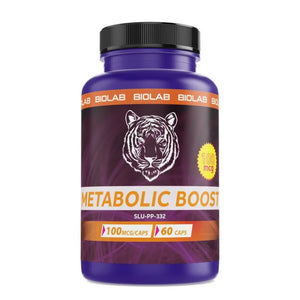
BioLab BPC-157 HCl 200 mcg, 60 caps is a BioLab listing of BPC-157, labelled at 200 mcg (0.2 mg) per capsule, 60 capsules per pack. It is supplied through the Muscle Market range for laboratory research only, is not for human consumption, and is sold to adults aged 18 and over. Below: what the published research on BPC-157 reports, what the label documents, how the UK rules and sport rules apply, and how batch certificates are handled for BioLab products.
About BPC-157
BPC-157, also written BPC157 and sometimes called body protection compound or pentadecapeptide BPC 157, is a synthetic chain of fifteen amino acids. Its sequence is a partial fragment of a protein identified in human gastric juice. In the laboratory it has been studied almost entirely in rodents and cell cultures, where research groups have examined models of tendon, ligament, muscle, gut and blood vessel injury and have described involvement of nitric oxide signalling and angiogenic growth factor pathways.
The "HCl" in this product name means the peptide is described as a hydrochloride salt. Peptides usually leave purification paired with a counter-ion such as acetate or chloride. The counter-ion adds weight without adding peptide, so a quoted mass can refer either to the salt or to the peptide within it. BioLab does not say which basis its 200 mcg figure uses. The identifiers below, taken from PubChem, describe the parent peptide.
| Property | Value for the parent peptide |
|---|---|
| Amino acid sequence | GEPPPGKPADDAGLV |
| Molecular formula | C62H98N16O22 |
| Molecular weight | 1419.5 g/mol |
| CAS number | 137525-51-0 |
| PubChem CID | 9941957 |
| Other names on record | Bepecin, PL-10, PLD-116 |
What the published research reports
A 2011 laboratory study from Taiwan used tendon explants and fibroblasts taken from rat Achilles tendon. BPC-157 was associated with faster outgrowth of cells from the explants, better survival of cells under oxidative stress and more cell migration, although it did not directly increase cell proliferation. The authors linked these effects to the FAK-paxillin signalling pathway; the work was confined to cells and tissue in culture. A 2016 review by the Zagreb group that has produced most of the BPC-157 literature summarised its own brain-gut axis work in animals; it is a review of that group's research rather than independent confirmation.
The most complete independent appraisal so far is a 2025 systematic review from Case Western Reserve University, which screened 544 records published between 1993 and 2024 and kept 36 studies. Thirty-five were preclinical. The single clinical paper was a retrospective case series in which 7 of 12 patients given an injection into the knee for chronic pain reported relief lasting more than six months; it had no control group, and it concerned injection, not capsules. The reviewers graded the whole body of evidence at levels IV and V, the lowest tiers, found no clinical data on adverse effects in humans, and flagged unregulated manufacture and contamination as hazards.
The limitations therefore matter more than any single finding: almost all of the evidence comes from a single research network, no randomised controlled trial in humans has been published in full, and BPC-157 has never been authorised as a medicine anywhere. Nothing above is a claim about this product. A longer account is in BPC-157: what the research actually shows, and what it does not.
This listing
- Manufacturer: BioLab
- Compound: BPC-157, labelled as the hydrochloride (HCl)
- Form: Capsules
- Pack size: 60 capsules
- Strength: 200 mcg (0.2 mg) per capsule, as stated by the manufacturer
- Total in pack: 12 mg (200 mcg x 60 capsules)
- Batch certificate of analysis: shown where BioLab supplies one for the batch we hold
Because BioLab states a strength, this pack can be set against other brands on total milligrams, which is the basis our BPC-157 collection uses. The method is explained in price per milligram.
BPC-157 in the UK: buying, legal status and what to check
Searches such as "BPC 157 UK legal" and "BPC 157 UK buy" ask two separate things: may it be sold here, and how can a buyer judge a seller.
Where the law stands
BPC-157 is not a licensed medicine in the UK and has not been assessed by the MHRA. It is not an authorised food supplement, so it may not be marketed for eating or swallowing, and it is not a controlled drug. That combination leaves one lawful basis for sale: as a material for laboratory research, supplied to adults aged 18 and over, with no instructions for use in people. Because no licensed BPC-157 product exists in any country, it is not something a GP or the NHS can prescribe. Buyers remain responsible for any rules that apply to them, including anti-doping rules.
Signs of a careful listing
- The manufacturer is named and the seller is an identifiable UK business with a contact route.
- The label gives a strength per capsule and a pack count, so the total can be worked out.
- Each pack carries a batch or lot number.
- Any certificate offered carries that same batch number and names the laboratory.
- The page describes research rather than promising results, and carries no dosing directions.
- Delivery is tracked, packaging is plain, and the returns terms are written down.
How this listing measures up
FreeMuscle LTD is a UK company based in Scunthorpe. BioLab is named as manufacturer, and the label states 200 mcg per capsule across 60 capsules, so points one and two are met. Points three and four depend on BioLab: we show a certificate only where BioLab has supplied one for the batch we hold, and if none is shown, none has been supplied. Sales are limited to adults, and this page gives no directions. Every UK order ships free by tracked delivery in plain packaging, orders placed before 2pm Monday to Friday are processed the same working day, EU delivery takes 3-7 working days, and unopened items may be returned within 30 days under our guarantee. Our UK supplier checklist expands on each point.
Capsules compared with other forms
The query "BPC 157 capsules vs injection" asks whether the delivery format changes what reaches the body. The honest answer is that nobody has measured it for capsules. Research on BPC-157 has used several routes: injection into the abdominal cavity in most rodent work, direct application in some wound models, and in certain Zagreb experiments the peptide was dissolved in the animals' drinking water. The 2025 systematic review reported that, in the animal data available, BPC-157 has a half-life of under 30 minutes, is metabolised in the liver and is cleared by the kidneys. None of those figures comes from a swallowed capsule in a person.
The underlying problem for any peptide taken by mouth is digestion. Stomach acid and pepsin, then pancreatic and brush-border enzymes, cleave peptide bonds, and a fifteen-residue chain is well within their range. The originating group reports that BPC-157 resists human gastric juice, but whether intact peptide crosses the gut wall in people is unknown.
As laboratory materials the formats behave differently. Capsules hold a fixed weight of dry powder, usually diluted with a filler, so uniformity depends on how well the batch was blended; a 200 mcg fill is a tiny fraction of the capsule contents, which makes even mixing harder. Lyophilised powder in vials stays dry until reconstituted; solutions, including ready-made liquids, are exposed to hydrolysis and contamination. None of this implies that any format has an effect. Both routes are examined in what the studies used and in do oral peptides work.
BPC-157 compared with TB-500
TB-500 is the compound searched most often next to BPC-157, as in "BPC 157 and TB 500" and "TB 500 vs BPC 157". They are often sold side by side, but they are unrelated molecules.
BPC-157 is a 15-residue fragment traced to a gastric juice protein and weighs about 1,420 g/mol. TB-500 is marketed as a synthetic peptide derived from thymosin beta-4, a 43-amino-acid protein of about 4,963 g/mol found inside most cells, where it binds monomeric actin, the building block of the cell's internal scaffolding, and so influences how cells move. Thymosin beta-4 research is spread across many groups and mostly uses the full-length protein, including small early clinical studies of eye and skin preparations; the fragment sold as TB-500 has no comparable human data, and BPC-157 work comes mostly from one Zagreb network.
| Question | BPC-157 | TB-500 |
|---|---|---|
| Parent molecule | Gastric juice protein | Thymosin beta-4 |
| Size | 15 amino acids | Fragment of a 43-amino-acid protein |
| Licensed as a medicine | Nowhere | Nowhere |
| WADA section | S0, non-approved substances | S2, growth factor modulators |
| Prohibited | At all times | At all times |
No study has compared the two directly, so there is no basis for ranking one above the other, and we publish nothing on using them together. TB-500 brands we hold are in the TB-500 collection, for example Thoroughbred Labs TB-500 capsules, and the literature is summarised in our TB-500 research guide.
Reading the certificate of analysis for this product
BioLab is a third-party brand in the Muscle Market range, so the testing position differs from our own label. Every Free Muscle-brand batch is assayed by Janoshik Analytical, an independent laboratory, with the certificate sent on request by email; that applies, for instance, to our BPC-150 capsules, but not to BioLab. For BioLab products we show a certificate of analysis only where the manufacturer supplies one for the specific batch we hold. A generic PDF with no batch number is not a batch certificate, and we do not present one as such. When a BioLab certificate is available, read it in this order:
- Batch number: compare it with the lot printed on your pack first. If they differ, nothing else on the page applies to your capsules.
- Identity method: HPLC compares retention time with a reference standard; LC-MS also measures the molecular mass, which for the parent peptide is close to 1419.5. A mass result is stronger evidence of identity.
- Purity: the percentage of the chromatogram taken by the BPC-157 peak. It says how clean the peptide is, not how much is in each capsule.
- Content per capsule: the measured amount, to set against the 200 mcg on the label. Check whether it is reported as salt or as peptide, given the HCl form.
- Laboratory and test date: a named laboratory can be contacted, and the date shows how old the result is relative to the batch.
If a field is missing, the certificate proves less. No content line means the 200 mcg figure rests on the label alone; no identity method means the purity figure could describe any peptide. Contact us with the product name and batch number to ask what is held for that batch. See our lab tests page and how to read a certificate of analysis.
Detection, sport and testing
BPC-157 has no current approval for human therapeutic use by any health authority, so it falls under section S0 (non-approved substances) of the WADA Prohibited List, where it is now given as a named example. S0 applies at all times, in and out of competition, across every sport that has adopted the World Anti-Doping Code, including those tested by UK Anti-Doping. Under strict liability, an athlete answers for any prohibited substance in their sample, whatever the label said.
A detection method is published. In 2017 the Sports Medicine Research and Testing Laboratory in Salt Lake City reported BPC-157 in confiscated vials and validated a urine test with a limit of detection of 0.1 ng/mL. The peptide stayed stable in stored urine for at least four days, and a metabolite formed in plasma was proposed as a second marker to make the test more specific. That paper did not measure excretion after human exposure, and no other study has, so the accurate description is detectable, window not established. Athletes should check the current list.
Storage, stability and handling
BioLab has not published stability data for this capsule, and no independent study of BPC-157 capsule shelf life exists, so any expiry date printed on the pack is the reference point. Peptide chemistry indicates what shortens it. Water is the main threat, because it allows hydrolysis of peptide bonds; hydrochloride salts of peptides can also draw moisture from the air, so a pack left open in a humid room is at particular risk. Heat speeds degradation and ultraviolet light adds to it. Capsule shells also soften in damp air.
For the laboratory, that translates into a short routine. Keep the container tightly closed, cool, dry and out of direct sunlight, away from radiators and steamy rooms. Leave any desiccant in place. If the pack is stored cold, allow it to warm to room temperature before opening so moisture does not condense inside. Keep capsules in their original labelled container so they can still be matched to a certificate. Use gloves for opened capsules, keep them away from food, children and pets, and dispose of unwanted material as chemical waste.
Glossary
- Amino acid residue: one unit in a peptide chain; BPC-157 has fifteen.
- Hydrochloride (HCl): a salt form in which chloride accompanies the peptide; it adds mass that is not peptide.
- Counter-ion: the charged partner, such as chloride or acetate, that stays with a peptide after purification.
- Microgram (mcg): one thousandth of a milligram; 200 mcg equals 0.2 mg.
- Preclinical: research in cells or animals, before any study in people.
- Systematic review: a structured search and appraisal of all studies on a question, using stated rules.
- Half-life: the time taken for the amount of a substance in the body or a sample to fall by half.
- Strict liability: the anti-doping principle that an athlete is responsible for any prohibited substance in their sample.
- Section S0: the WADA category for substances with no current approval for human therapeutic use.
Related
- All brands of BPC-157 we stock, compared
- All BioLab products
- Research peptides
- Batch testing and certificates of analysis
- Delivery and returns
This product is supplied for laboratory research use only. It has not been evaluated by the MHRA, EMA or FDA. It is not a medicine, not a food supplement and not for human consumption. Sold only to adults aged 18 and over. Nothing on this page is medical, dosing or usage advice, and descriptions of published studies are not claims about this product.
References
- Chang CH, et al. The promoting effect of pentadecapeptide BPC 157 on tendon healing involves tendon outgrowth, cell survival, and cell migration. J Appl Physiol (1985). 2011;110(3):774-80. PMID: 21030672.
- Sikiric P, et al. Brain-gut Axis and Pentadecapeptide BPC 157: Theoretical and Practical Implications. Curr Neuropharmacol. 2016;14(8):857-865. PMID: 27138887.
- Vasireddi N, et al. Emerging Use of BPC-157 in Orthopaedic Sports Medicine: A Systematic Review. HSS J. 2025;21(4):485-495. PMID: 40756949.
- Cox HD, et al. Detection and in vitro metabolism of the confiscated peptides BPC 157 and MGF R23H. Drug Test Anal. 2017;9(10):1490-1498. PMID: 28035768.
Frequently asked questions
Is BPC-157 legal in the UK?
BPC-157 is not a licensed medicine in the UK and it is not an authorised food supplement. It is not a controlled drug. It may be sold to adults for laboratory research purposes, which is the only basis on which this listing is offered. It is not for human consumption and nothing on this page is medical or dosing advice.
Is BPC-157 a peptide or a SARM?
BPC-157 is a peptide, a chain of fifteen amino acids derived from a protein found in gastric juice. It is not a SARM. SARMs are small non-steroidal molecules that act at the androgen receptor, whereas BPC-157 has no androgen receptor activity described in the literature and is studied for tissue repair models in animals.
Has BPC-157 been tested in humans?
No randomised controlled trial of BPC-157 in humans has been published in full. The originating Zagreb group refers to early trials in inflammatory bowel disease, but the published evidence is almost entirely from rats, mice and cell cultures. A 2025 systematic review found one small uncontrolled case series and no clinical safety data. BPC-157 has never been approved as a medicine.
Is BPC-157 detectable in sport drug tests?
BPC-157 is prohibited at all times under section S0 of the WADA Prohibited List, which covers substances with no current approval for human use, and it is named there as an example. An anti-doping laboratory published a validated urine method in 2017 with a detection limit of 0.1 ng/mL. No study has reported how long it remains detectable after exposure. Anyone subject to anti-doping rules should treat it as prohibited and check the current list.
What strength of BPC-157 should I choose?
We do not advise on strength, quantity or use. Every product in the Muscle Market range is sold for laboratory research only and is not for human consumption. The listing states what the manufacturer prints on the label so that researchers can compare total milligrams per pack and request the batch certificate where one exists.
Are BPC-157 capsules comparable with injection?
No published study has measured how much intact BPC-157 reaches the blood after a capsule is swallowed, in animals or people. Most rodent research injected the peptide, and some Zagreb studies added it to drinking water. Digestive enzymes break down peptides of this size, although the originating group reports stability in gastric juice. We make no claim that any format of this product has an effect, and it is not for human consumption.
What is the difference between BPC-157 and TB-500?
BPC-157 is a 15-amino-acid peptide based on a sequence from a gastric juice protein, studied mainly in rodent injury models from one Zagreb group. TB-500 is sold as a synthetic peptide derived from thymosin beta-4, a 43-amino-acid actin-binding protein. No study has compared them. Neither is licensed as a medicine anywhere, and WADA prohibits BPC-157 under S0 and thymosin beta-4 derivatives under S2.
Can BPC-157 be prescribed on the NHS?
No. No medicine containing BPC-157 holds a marketing authorisation in the UK or anywhere else, so it cannot be prescribed by a GP or through the NHS. It is also not an authorised food supplement. In the UK it may be supplied only as a laboratory research material to adults aged 18 and over, which is the basis on which this BioLab listing is offered.
Do you publish BPC-157 dosage, benefits or side effects?
We publish no dosing, cycle or combination guidance and make no claims about benefits or results, because this product is sold for laboratory research and is not for human consumption. On adverse effects, a 2025 systematic review found no clinical safety data in humans; almost all published work is in animals and cells. Before-and-after accounts cannot show what a capsule contained or what caused any change.
Are BPC-157 UK reviews a reliable way to judge a product?
Reviews and forum threads can tell you about delivery speed or customer service, but they cannot tell you what a capsule contained. That needs a certificate of analysis from a named laboratory, carrying the same batch number as the pack. For this BioLab product, ask us what the manufacturer has supplied for the current batch and compare the lot numbers yourself.
Same compound, other brands See all 3 →
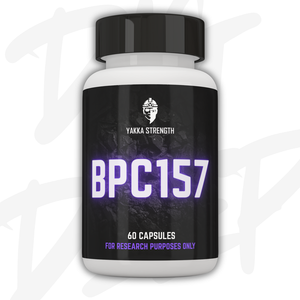
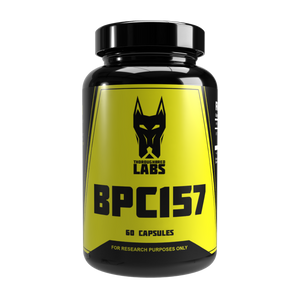
More from BioLab See all 4 →
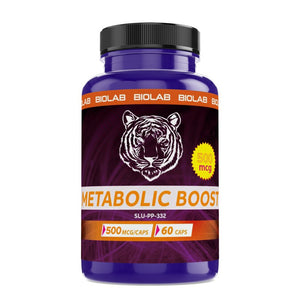
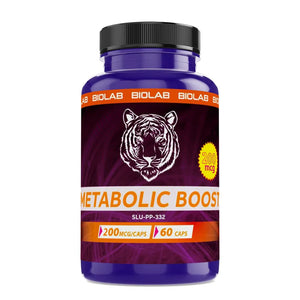
Supplied for laboratory and research use. Not for human consumption. Not an approved medicine, and nothing above is dosing advice. You must be 18 or over to order.