RESEARCH TB-500 THYMOSIN
Related to thymosin beta-4, a protein involved in cell migration and repair. Not authorised as a medicine or a food supplement in the UK or EU. Supplied for laboratory research use only — read the evidence section below before you decide.
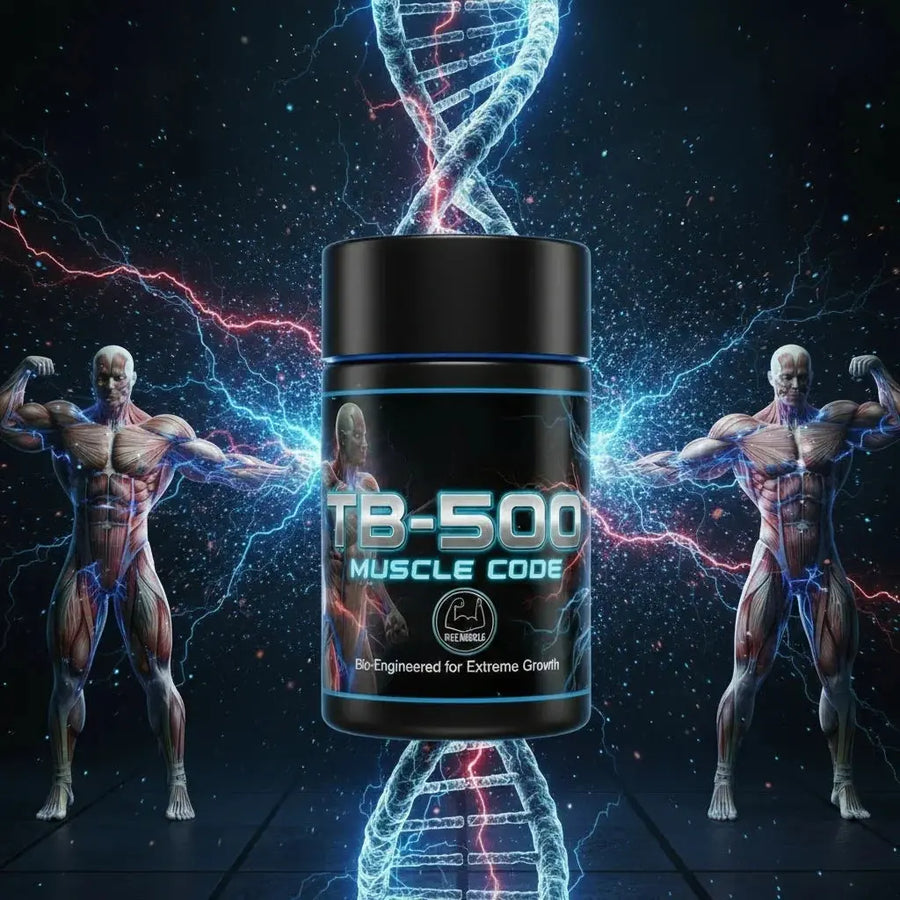
WHAT IS
ACTUALLY KNOWN
We would rather you bought with your eyes open than not at all. Here is the state of the evidence, including the parts that do not help us.
What it is
This is a synthetic peptide fragment. Related to thymosin beta-4, a protein involved in cell migration and repair.
State of the evidence
Human clinical evidence is limited. Most citations are animal or in-vitro work.
Known risks
Long-term safety in humans has not been established. Peptides taken by mouth are also largely broken down in the gut.
Regulatory status
Not authorised as a medicine or a food supplement in the UK or EU.
Status in sport
Thymosin beta-4 is on the WADA Prohibited List.
What we verify
Identity and purity, per batch, by a laboratory we do not own. We verify what is in the capsule — nothing about what it does.
SPEC SHEET
What is in the bottle, and what is on the certificate.
TB-500
A synthetic fragment related to thymosin beta-4, as stated on the certificate of analysis.
Bottle contents
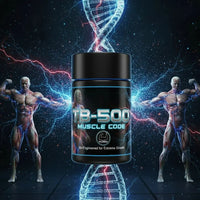
Each bottle contains 60 capsules.
Research use only
We do not publish a human dosing schedule for this compound.
Independently assayed
Each batch is assayed by Janoshik Analytical, an independent laboratory. The Certificate of Analysis for your batch is available on request.
This product is supplied for laboratory research use only. We do not provide dosing instructions, cycle lengths or post-cycle protocols for human use.
TB-500
Tax included · assayed per batch
WHAT WE CAN
PROVE
We don't have customer reviews to show you yet, and we're not going to invent any. Here is what we can actually put in front of you instead.
Assayed by a lab we don't own
Batches go to Janoshik Analytical, an independent testing laboratory. We don't choose the result.
Tested per batch, not per year
A certificate from a batch made two years ago says nothing about the pack in your hand.
Batch number on the pack
Email it to us with the product name and we'll send the Certificate of Analysis for that batch.
QUESTIONS, ANSWERED
Related to thymosin beta-4, a protein involved in cell migration and repair. Human clinical evidence is limited. Most citations are animal or in-vitro work.
This product is supplied for laboratory research use only. We do not provide dosing instructions, cycle lengths or post-cycle protocols for human use.
Largely, no. Peptides are broken down by digestive enzymes before absorption, which is why clinical work on this class uses injection. We are not going to claim a capsule matches that.
Yes — identity and purity, per batch, by Janoshik Analytical. Email us the batch number from your pack and we will send that batch's Certificate of Analysis. You do not need to have bought anything to ask.
Sold as a research compound for laboratory and educational use. Not a medicine; not evaluated by the MHRA, EMA or FDA; not intended to diagnose, treat, cure or prevent any disease. Not for human consumption. Not for use by anyone under 18 or by women who are pregnant or breastfeeding.
COMPOUND MONOGRAPH
TB-500 in the UK: buying, legal status and what to check
TB-500 is not a controlled drug under the Misuse of Drugs Act 1971, but it holds no MHRA marketing authorisation and is not an authorised food supplement or novel food, so it cannot lawfully be sold for human consumption. A UK seller offering healing claims, injection guides or "protocols" is presenting an unlicensed product as a medicine. Free Muscle supplies it only as a research compound, to adults aged 18 or over, for laboratory use.
The name itself needs checking, because "TB-500" is a trade name rather than a defined pharmaceutical substance. Doping laboratories analysing products sold under it identified the N-terminally acetylated 17-23 fragment of thymosin beta-4 (Esposito 2012; Ho 2012), while a French racing laboratory found products online claiming to contain either that fragment or the full-length protein (Delcourt 2025). A trustworthy listing says which molecule is in the capsule, prints a batch number on the bottle, offers a certificate for that batch from a laboratory the seller does not own, and names a UK company. This listing is 60 capsules per bottle, each batch assayed by Janoshik Analytical with the certificate for that batch sent by email on request, sold by FreeMuscle LTD of Scunthorpe. UK delivery is free, tracked and plain-packaged, orders before 2pm Monday to Friday are processed the same working day, EU delivery takes 3 to 7 working days, and unopened items can be returned within 30 days (see shipping and returns).
Capsules compared with vials and other forms
"TB-500 capsules UK" and "TB-500 tablets UK" are common searches, yet no published study has given TB-500 or thymosin beta-4 by mouth. The research used intravenous infusion, eye drops, topical application or injection into the abdominal cavity. Peptides taken by mouth are largely broken down by digestive enzymes before they can be absorbed. Drucker's 2020 review of oral peptide therapeutics notes that the few oral peptides taken into clinical trials, such as insulin and calcitonin, relied on permeation enhancers, enzyme inhibitors or similar delivery technology, and that oral semaglutide reached approval only with such a formulation. Lyophilised vials need reconstitution with sterile water, and the resulting concentration depends on the volume added and on cold storage once mixed. A capsule holds a fixed quantity of dry material, set at filling and measurable by assay, in a sealed bottle. That suits handling and verification. It does not change how peptides behave in the gut, and no efficacy is claimed for it.
TB-500 compared with thymosin beta-4 and BPC-157
Is thymosin beta-4 the same as TB-500? Not quite. Thymosin beta-4 is a 43-amino-acid protein made by the body, abundant and highly conserved across mammals and central to organising the cell's actin scaffold (Delcourt 2025). TB-500, as analysed by doping laboratories, is a synthetic copy of residues 17 to 23, LKKTETQ, with an acetyl group added artificially to its N-terminus; that segment is the protein's actin-binding region (Ho 2012). Thymosin beta-4 has human data from sponsored clinical programmes; the fragment has none published.
"TB-500 vs BPC-157" is the most searched comparison. BPC-157 is a synthetic 15-amino-acid peptide whose sequence was taken from a protein in gastric juice. The two are unrelated in sequence and origin, both rest mainly on rodent work, and neither is licensed anywhere. Biçer and colleagues (2026) compared them after surgical Achilles tendon repair in 32 rats: the TB-500 group showed significantly higher load to failure and better histology scores than controls, the BPC-157 group showed numerically better scores without reaching significance on total scores, and the combination conferred no additional benefit over either agent alone. It was an exploratory animal study, not guidance on combining compounds. WADA lists thymosin beta-4 and its derivatives under section S2 and BPC-157 under S0, non-approved substances; both are prohibited at all times. See the BPC-157 collection and what the BPC-157 research shows.
What the published research reports
Malinda and colleagues (1999) applied thymosin beta-4 topically or by intraperitoneal injection to full-thickness skin wounds in rats and reported re-epithelialisation 42 per cent above saline controls at day 4 and up to 61 per cent at day 7, with more collagen deposition and new vessel formation. Ruff and colleagues (2010) gave synthetic thymosin beta-4 intravenously to 40 healthy volunteers in four placebo-controlled cohorts, once and then daily for 14 days at ascending levels; adverse events were infrequent and mild or moderate, with no serious adverse event, over a short observation period. Sosne and colleagues (2015) randomised nine patients with severe dry eye to thymosin beta-4 eye drops or vehicle for 28 days. At day 56 ocular discomfort was 35.1 per cent lower and corneal staining 59.1 per cent lower than with vehicle, but the comparison rested on 12 treated eyes against six control eyes. Mendias and Awan (2026), reviewing peptides marketed for sports injuries including thymosin beta-4 and TB-500, concluded that favourable animal findings are not matched by rigorous human data, and warned of potential for serious harm and of placebo effects amplified by social media. All the human work used full-length thymosin beta-4, intravenously or as eye drops; none tested the TB-500 fragment or an oral form. None of this is a claim about the capsules listed here.
Reading the certificate of analysis for this product
A batch certificate should answer four questions. Identity: on peptide certificates this is usually shown by mass spectrometry, and the measured mass should match the molecule named. This product is labelled as a synthetic thymosin beta-4 fragment, so the result should correspond to that short acetylated peptide, with a mass under 1,000 daltons, not to the full-length protein. For comparison, full-length thymosin beta-4 is PubChem CID 45382195, C212H350N56O78S, molecular weight about 4,963, InChIKey UGPMCIBIHRSCBV-UHFFFAOYSA-N. Purity: the share of the HPLC signal belonging to the intact peptide, the rest being truncated sequences and other synthesis impurities. Purity is not peptide content, because a peptide salt also carries counter-ions and water. Quantity: the milligrams found per capsule, compared with the label. Provenance: a batch number matching the one on the bottle, the test date and the laboratory's name. A certificate showing only a product name, or a batch number absent from the pack, is a marketing document rather than a batch record. See our guides to reading a certificate of analysis and Janoshik Analytical, and how we test.
Detection, sport and testing
Section S2 of the WADA Prohibited List names thymosin beta-4 and its derivatives, such as TB-500, among growth factor modulators, prohibited in and out of competition; UK Anti-Doping applies that list, and horse racing and equestrian authorities also forbid it (Delcourt 2025). Esposito and colleagues (2012) synthesised the acetylated fragment as a reference standard and proposed a liquid chromatography mass spectrometry method for plasma and urine. Ho and colleagues (2012) detected the peptide and its metabolites in horse urine and plasma after a single administration. Because the body makes thymosin beta-4, testing for the full-length protein is harder, but Delcourt and colleagues (2025) showed that a synthetic impurity could reveal administration of a product. No published study reports a detection window in humans, so it is detectable and the window has not been established.
Storage, stability and handling
Dry peptides degrade by hydrolysis, deamidation and oxidation, all faster with heat, moisture and light. Keep the bottle tightly closed, with any desiccant left inside, in a cool, dry, dark place, and avoid moving an opened bottle in and out of a fridge, since condensation adds moisture. Do not decant capsules into unlabelled containers, and record the batch number against any sub-sample. Handle with clean, dry gloves, dispose of unused material as laboratory waste, and keep out of reach of children and pets. The certificate's test date is the reference point for the stated purity.
Glossary
- Thymosin beta-4: a 43-amino-acid protein made by the body that binds actin inside cells.
- Ac-LKKTETQ: residues 17 to 23 of thymosin beta-4 with an acetyl group on the N-terminus.
- Lyophilised: freeze-dried to a powder, the usual form of peptides supplied in vials.
- Re-epithelialisation: regrowth of the surface cell layer over a wound.
- Intraperitoneal: injected into the abdominal cavity, a common route in rodent studies.
- Deamidation: loss of an amide group from glutamine or asparagine, a common peptide degradation route.
- HPLC purity: the share of a chromatographic signal that comes from the intact molecule.
- Counter-ion: the ion, often acetate, paired with a peptide in its salt form.
- Endogenous: produced within the body.
Related compounds and reading
- TB-500 collection
- BPC-157
- BPC-150
- Research peptides
- TB-500 and thymosin beta-4: research guide
- BPC-157 capsules vs injection
- Do oral peptides actually work?
- Comparing peptides per milligram
TB-500 is not a licensed medicine and not a food supplement. It has not been assessed by the MHRA, EMA or FDA. It is sold for laboratory research only, to adults aged 18 or over, and is not for human consumption. Nothing on this page is medical or dosing advice.
References
- Malinda KM, et al. Thymosin beta4 accelerates wound healing. J Invest Dermatol. 1999;113(3):364-368. PMID: 10469335.
- Ruff D, et al. A randomized, placebo-controlled, single and multiple dose study of intravenous thymosin beta4 in healthy volunteers. Ann N Y Acad Sci. 2010;1194:223-229. PMID: 20536472.
- Sosne G, et al. Thymosin β4 significantly improves signs and symptoms of severe dry eye in a phase 2 randomized trial. Cornea. 2015;34(5):491-496. PMID: 25826322.
- Mendias CL, Awan TM. Safety and efficacy of approved and unapproved peptide therapies for musculoskeletal injuries and athletic performance. Sports Med. 2026;56(8):1921-1935. PMID: 41966639.
- Esposito S, et al. Synthesis and characterization of the N-terminal acetylated 17-23 fragment of thymosin beta 4 identified in TB-500, a product suspected to possess doping potential. Drug Test Anal. 2012;4(9):733-738. PMID: 22962027.
- Ho EN, et al. Doping control analysis of TB-500, a synthetic version of an active region of thymosin β4, in equine urine and plasma by liquid chromatography-mass spectrometry. J Chromatogr A. 2012;1265:57-69. PMID: 23084823.
- Delcourt V, et al. Equine doping controls of thymosin β4: a population study and strategy for misuse detection. Drug Test Anal. 2025;17(7):1071-1077. PMID: 39314109.
- Biçer O, et al. Effects of BPC-157 and TB-500 on Achilles tendon healing in rats: a histopathological and biomechanical study. Jt Dis Relat Surg. 2026;37(3):822-837. PMID: 42542926.
- Drucker DJ. Advances in oral peptide therapeutics. Nat Rev Drug Discov. 2020;19(4):277-289. PMID: 31848464.