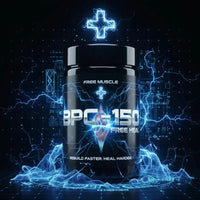
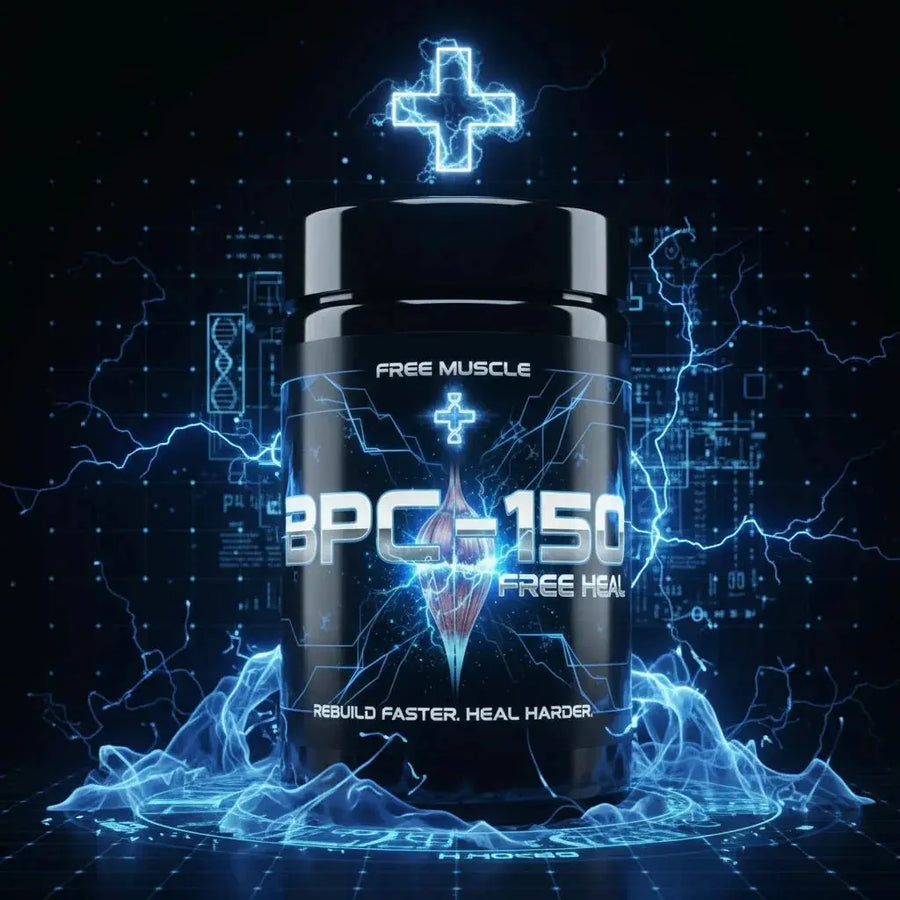
RESEARCH BPC-150 1000MG
Marketed as a variant of BPC-157, a sequence derived from a gastric protein. Not authorised as a medicine or a food supplement in the UK or EU. Supplied for laboratory research use only — read the evidence section below before you decide.
WHAT IS
ACTUALLY KNOWN
We would rather you bought with your eyes open than not at all. Here is the state of the evidence, including the parts that do not help us.
What it is
This is a synthetic peptide. Marketed as a variant of BPC-157, a sequence derived from a gastric protein.
State of the evidence
Human clinical evidence is essentially absent. Most citations are animal studies.
Known risks
Long-term safety in humans has not been established. Peptides taken by mouth are also largely broken down in the gut.
Regulatory status
Not authorised as a medicine or a food supplement in the UK or EU.
Status in sport
Check the current WADA Prohibited List before buying if you compete in a tested sport.
What we verify
Identity and purity, per batch, by a laboratory we do not own. We verify what is in the capsule — nothing about what it does.
SPEC SHEET
What is in the bottle, and what is on the certificate.
BPC-150
1000mg per serving, as stated on the certificate of analysis for the batch.
Bottle contents
Each bottle contains 60 capsules.
Research use only
We do not publish a human dosing schedule for this compound.
Independently assayed
Each batch is assayed by Janoshik Analytical, an independent laboratory. The Certificate of Analysis for your batch is available on request.
This product is supplied for laboratory research use only. We do not provide dosing instructions, cycle lengths or post-cycle protocols for human use.
BPC-150
Tax included · assayed per batch
WHAT WE CAN
PROVE
We don't have customer reviews to show you yet, and we're not going to invent any. Here is what we can actually put in front of you instead.
Assayed by a lab we don't own
Batches go to Janoshik Analytical, an independent testing laboratory. We don't choose the result.
Tested per batch, not per year
A certificate from a batch made two years ago says nothing about the pack in your hand.
Batch number on the pack
Email it to us with the product name and we'll send the Certificate of Analysis for that batch.
QUESTIONS, ANSWERED
Marketed as a variant of BPC-157, a sequence derived from a gastric protein. Human clinical evidence is essentially absent. Most citations are animal studies.
This product is supplied for laboratory research use only. We do not provide dosing instructions, cycle lengths or post-cycle protocols for human use.
Largely, no. Peptides are broken down by digestive enzymes before absorption, which is why clinical work on this class uses injection. We are not going to claim a capsule matches that.
Yes — identity and purity, per batch, by Janoshik Analytical. Email us the batch number from your pack and we will send that batch's Certificate of Analysis. You do not need to have bought anything to ask.
Sold as a research compound for laboratory and educational use. Not a medicine; not evaluated by the MHRA, EMA or FDA; not intended to diagnose, treat, cure or prevent any disease. Not for human consumption. Not for use by anyone under 18 or by women who are pregnant or breastfeeding.
COMPOUND MONOGRAPH
BPC-150 in the UK: buying, legal status and what to check
BPC-150 is sold as a variant of BPC-157, so the common UK questions about BPC-157, whether it is legal, where it can be bought and whether the NHS offers it, have the same answers for both names. Neither name is listed as a controlled drug under the Misuse of Drugs Act 1971. Neither holds an MHRA marketing authorisation or is an authorised food supplement or novel food, so neither may be sold for human consumption. The NHS does not prescribe BPC-157 because no licensed product containing it exists anywhere. Free Muscle supplies BPC-150 to adults aged 18 or over as a laboratory research material.
No published study uses the name BPC-150, so the listing has to be judged on its documentation. A trustworthy UK listing names a registered company, prints a batch number on the pack, offers an independent certificate for that batch rather than a sample report, and ships tracked in plain packaging without usage instructions. Here the seller is FreeMuscle LTD of Scunthorpe, every batch is assayed by Janoshik Analytical with the certificate for a batch sent by email on request, UK delivery is free, tracked and in plain packaging, and orders placed before 2pm Monday to Friday are processed the same working day.
Capsules compared with injection and other forms
Published BPC-157 research splits by route of administration. Most rat studies injected the peptide into the abdominal cavity. A smaller set dissolved it in drinking water, and Cerovecki and colleagues (2010) reported improved healing of a surgically cut knee ligament in rats given it in drinking water, by injection into the abdomen or as a topical cream. The first formal pharmacokinetic study, by He and colleagues (2022), tested intravenous and intramuscular injection but not the oral route, so it gives no figure for how much intact peptide survives being swallowed. Peptides taken by mouth are largely broken down by digestive enzymes, and Mateescu and colleagues (2026) found no validated formulation of BPC-157 and no permeability data.
The practical differences between formats concern handling rather than effect. A freeze-dried (lyophilised) vial must be reconstituted, measured by volume and refrigerated once mixed, and peptide in solution degrades faster than dry powder. A capsule holds a pre-weighed quantity of dry powder in a sealed shell at room temperature, giving a laboratory identical units from one assayed batch. None of this means a capsule reproduces injected study results.
BPC-150 compared with BPC-157 and TB-500
| BPC-150 (this product) | BPC-157 | TB-500 | |
|---|---|---|---|
| What it is | Free Muscle designation, sold as a variant of BPC-157 | 15-amino-acid peptide, GEPPPGKPADDAGLV, from a gastric juice protein | Thymosin beta-4 derivative; the acetylated 17-23 fragment (Ac-LKKTETQ) was identified in a TB-500 product |
| Published research | None under this name | Mostly rodent and cell studies; three small uncontrolled human pilot studies | Mostly on full-length thymosin beta-4; no published human trials of the fragment |
| Licensed medicine | No | No | No |
| WADA class | S0, non-approved substances, as a product sold as a BPC-157 variant | S0, named since 2022 | S2, named as a thymosin beta-4 derivative |
BPC-157 and TB-500 are often searched for together but are unrelated. The mechanisms proposed for BPC-157 come from preclinical work and involve growth hormone receptor expression, cell-growth and blood-vessel-forming pathways, and lower inflammatory cytokines (Vasireddi 2025). TB-500 is linked to thymosin beta-4, an actin-binding protein, and the Ghent doping control laboratory identified its acetylated 17-23 fragment in a product sold as TB-500 (Esposito 2012). For BPC-150 the decisive comparison is with BPC-157 itself: one is a defined molecule, the other a product name, so no BPC-157 finding transfers to it. We do not publish guidance on combining any of these. See the TB-500 collection, the Free Muscle TB-500 capsules and the BPC-157 collection for other brands of the literature peptide.
What the published research reports
Everything below concerns BPC-157, the literature peptide. None of it was carried out on BPC-150. Vasireddi and colleagues (2025) systematically reviewed the orthopaedic literature to June 2024 and included 36 studies, 35 of them preclinical. In preclinical models BPC-157 was reported to improve functional, structural and biomechanical outcomes after muscle, tendon, ligament and bone injury. The single clinical study was a retrospective report of knee injections; the reviewers found no clinical safety data, rated the evidence as level IV and V, and flagged risks from unregulated manufacture and contamination. He and colleagues (2022) supplied the first pharmacokinetic data: an elimination half-life under 30 minutes in rats and dogs, and rapid breakdown into fragments and single amino acids. Lee and Burgess (2025) gave intravenous infusions to two adults who had received the peptide before and reported no change in the blood markers measured; two participants without a control group cannot characterise risk. Mateescu and colleagues (2026) counted fewer than 30 human subjects across three uncontrolled pilot studies and no completed phase II trial. None of this is a claim about the capsules on this page.
Reading the certificate of analysis for this product
Every Free Muscle batch is assayed by Janoshik Analytical. Read the certificate line by line.
- Identity: the compound matched and the method, usually LC-MS. PubChem lists BPC-157 as C62H98N16O22, 1419.5 g/mol, CAS 137525-51-0, InChIKey HEEWEZGQMLZMFE-RKGINYAYSA-N; comparing the reported mass with these values shows which molecule the batch actually contains.
- Purity: an HPLC percentage for the main peak against related peptides, such as truncated sequences left over from synthesis.
- Quantity: the amount found per capsule. The 1000mg label figure is quoted here as printed. The only other BPC capsule in our range with a stated strength, the BioLab BPC-157 capsule, states 200 micrograms, so check whether the result refers to peptide content or total capsule fill, and in which unit.
- Batch number and test date: these tie the report to the bottle, and the number must match the one on the pack.
A certificate without a batch number, laboratory name or date is a marketing document, not a batch record. Because every batch of this brand has a report, a missing field is a reason to contact us, not a sign that no test was run. See our guides to reading a certificate of analysis and what Janoshik Analytical does, and the lab tests page.
Detection, sport and testing
BPC-157 has been named under class S0, non-approved substances, on the WADA Prohibited List since 2022. S0 covers any pharmacological substance not addressed elsewhere on the List and without current approval by any government health authority for human therapeutic use, so a product sold as a variant of BPC-157 falls within it whatever its label says, and the class is prohibited at all times. UK Anti-Doping applies the same list under strict liability. Cox and colleagues (2017) validated a urine method for BPC-157 with a limit of detection of 0.1 ng/mL and reported that measuring a stable metabolite alongside the parent peptide improves its specificity. No study has published a detection window in humans, so the peptide is detectable and the window is not established.
Storage, stability and handling
The threats to dry peptide powder are moisture, heat and light. Moisture drives hydrolysis of peptide bonds, so keep the bottle closed between uses and leave any desiccant sachet in place. If the bottle has been refrigerated, let it reach room temperature before opening so that condensation does not settle on the capsules. Keep capsules in the original bottle, because its batch number is the only link to the certificate. Handle with clean, dry gloves, keep out of reach of children and pets, and dispose of unwanted material as laboratory waste. The certificate's purity figure applies at its test date; material kept long afterwards has not been re-tested.
Glossary
- Pentadecapeptide: a chain of 15 amino acids, the structure of BPC-157.
- Body protection compound: the name given to the gastric juice protein from which the BPC-157 sequence was taken.
- PL 14736: the development code used for BPC-157 in inflammatory bowel disease research.
- Elimination half-life: the time for the blood concentration of the intact molecule to halve.
- LC-MS: liquid chromatography with mass spectrometry, which confirms identity by molecular mass.
- HPLC purity: the share of a sample that is the intended peptide, measured by chromatographic separation.
- Limit of detection: the lowest concentration a method can reliably distinguish from zero.
- Strict liability: the anti-doping principle that a positive finding counts regardless of intent or labelling.
Related compounds and reading
- BPC-150 collection
- BPC-157 from other brands
- TB-500 (thymosin beta-4)
- Research peptides
- BPC-157: what the research actually shows
- BPC-157 capsules vs injection: what the studies used
- TB-500 and thymosin beta-4: research summary
- Do oral peptides actually work?
BPC-150 is not a licensed medicine and not a food supplement. It has not been evaluated by the MHRA, EMA or FDA. It is supplied for laboratory research only, is not for human consumption, and is sold to adults aged 18 or over. Nothing on this page is medical or dosing advice.
References
- Cerovecki T, et al. Pentadecapeptide BPC 157 (PL 14736) improves ligament healing in the rat. J Orthop Res. 2010;28(9):1155-1161. PMID: 20225319.
- He L, et al. Pharmacokinetics, distribution, metabolism, and excretion of body-protective compound 157, a potential drug for treating various wounds, in rats and dogs. Front Pharmacol. 2022;13:1026182. PMID: 36588717.
- Mateescu DM, et al. BPC-157 as an Investigational Peptide Therapeutic: Biopharmaceutical Challenges, Formulation Strategies, and Translational Development Barriers. Pharmaceutics. 2026;18(5):625. PMID: 42198317.
- Vasireddi N, et al. Emerging Use of BPC-157 in Orthopaedic Sports Medicine: A Systematic Review. HSS J. 2025;21(4):485-495. PMID: 40756949.
- Esposito S, et al. Synthesis and characterization of the N-terminal acetylated 17-23 fragment of thymosin beta 4 identified in TB-500, a product suspected to possess doping potential. Drug Test Anal. 2012;4(9):733-738. PMID: 22962027.
- Lee E, Burgess K. Safety of Intravenous Infusion of BPC157 in Humans: A Pilot Study. Altern Ther Health Med. 2025;31(5):20-24. PMID: 40131143.
- Cox HD, et al. Detection and in vitro metabolism of the confiscated peptides BPC 157 and MGF R23H. Drug Test Anal. 2017;9(10):1490-1498. PMID: 28035768.