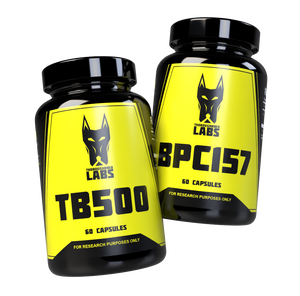
Thoroughbred Labs BPC-157 Peptide Capsules is a 60-capsule pack of BPC-157, a synthetic 15-amino-acid peptide, made by Thoroughbred Labs and stocked by Free Muscle in the Muscle Market range. No per-capsule peptide content is stated in the manufacturer details we hold for this pack, so the strength is listed as not stated. The pack is supplied to adults aged 18 and over for laboratory research only. This page summarises the research on BPC-157, lists what we can confirm about the pack, sets out the UK legal position and anti-doping rules, and explains how certificates of analysis are handled for Thoroughbred Labs products.
About BPC-157
BPC-157 is a pentadecapeptide, a chain of 15 amino acids, that was isolated as a fragment of a gastric protein and then produced synthetically. The name stands for Body Protection Compound 157, and chemical databases also list it as BPC157, Bepecin and PL-10. As a peptide it is neither a SARM nor a steroid, and no regulator has approved it as a medicine.
- Sequence: Gly-Glu-Pro-Pro-Pro-Gly-Lys-Pro-Ala-Asp-Asp-Ala-Gly-Leu-Val (GEPPPGKPADDAGLV)
- CAS number: 137525-51-0
- Molecular formula: C62H98N16O22
- Molecular weight: 1419.5 g/mol
- InChIKey: HEEWEZGQMLZMFE-RKGINYAYSA-N
- PubChem CID: 9941957
What the published research reports
In a 2011 laboratory study from Chang Gung University in Taiwan, using explants and fibroblasts taken from rat Achilles tendon, BPC-157 accelerated the outgrowth of fibroblasts from the explants, increased cell survival under oxidative stress and increased cell migration in culture, without directly changing cell proliferation. A 2016 review by the University of Zagreb group that first described the peptide collected its own rodent findings across gut, liver and central nervous system models, proposing links to the serotonin and dopamine systems and to several cell-signalling pathways.
The broadest overview so far is a 2025 systematic review from Case Western Reserve University covering the literature to June 2024. Of 544 records, 36 studies qualified: 35 preclinical and one clinical report, a retrospective series of 12 patients with knee pain given injections into the joint, with no control group. All sat at evidence level IV or V, the lowest tiers. The reviewers found no clinical safety data, summarised the half-life as under 30 minutes with metabolism in the liver and clearance by the kidneys, and listed unregulated manufacturing and contamination among the possible sources of harm.
These are laboratory and animal results. No human randomised controlled trial of BPC-157 has been published in a peer-reviewed journal, no human safety database exists, and most of the published animal work comes from a single research group. The preclinical work described here is not a claim about this product. A longer account is in BPC-157: what the research actually shows.
This listing
- Compound: BPC-157
- Brand: Thoroughbred Labs
- Form: capsules
- Pack size: 60 capsules
- Strength per capsule: not stated in the manufacturer details we hold
- Total per pack: cannot be calculated without a stated strength
- Batch certificate: shown where Thoroughbred Labs supplies one for the batch we hold
- Intended use: laboratory research only, not for human consumption
- Sold to adults aged 18 and over
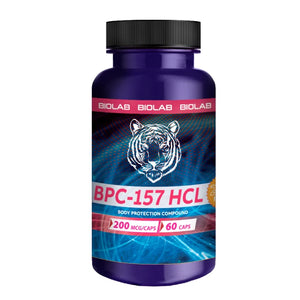
With no per-capsule content stated, this pack cannot be compared on milligrams with brands that do. A batch certificate, if available, may give a measured content. Of the BPC-157 brands we stock, the BioLab listing is the one that states a figure, 200 mcg per capsule. See how to compare by milligram.
BPC-157 in the UK: buying, legal status and what to check
Can BPC-157 be sold in the UK?
Only as a research material. BPC-157 is not a licensed medicine in the UK: it has no MHRA marketing authorisation, is not an authorised food supplement, and cannot lawfully be sold for human consumption. It is not a controlled drug under the Misuse of Drugs Act 1971; what UK law regulates instead is presentation, since a product sold to treat or prevent disease is treated as a medicine and one sold to be eaten must satisfy food law. With no licensed BPC-157 product anywhere, the NHS does not prescribe it and no pharmacy can dispense it. Free Muscle supplies it to adults aged 18 or over for laboratory research only. It is banned in sport under WADA section S0, and buyers are responsible for the rules that apply to them, including any anti-doping code. The same framework covers our other research peptides.
What to check before buying from any UK seller
The manufacturing and contamination concerns raised in the 2025 review translate into checks that can all be made before ordering:
- Seller and maker: a registered UK company you can contact, and a named manufacturer on the label.
- Batch: a lot number on the pack and a certificate of analysis carrying the same number, from a named laboratory.
- Content: a stated amount per capsule, so the pack can be compared and checked against the certificate.
- Terms: sale limited to adults, a laboratory-use label, and no instructions or promised outcomes anywhere on the listing.
- Delivery: tracked, in plain packaging, with a written returns policy.
How this Thoroughbred Labs listing measures up
| Check | Position for this pack |
|---|---|
| Seller and maker | FreeMuscle LTD, a UK company based in Scunthorpe; manufactured by Thoroughbred Labs |
| Batch certificate | Shown only where Thoroughbred Labs supplies one for the batch we hold; ask us before ordering |
| Content | Not met: no per-capsule content is stated |
| Terms | Laboratory research only, adults 18 and over, no directions for use |
| Delivery | Free tracked UK delivery in plain packaging; orders before 2pm Monday to Friday processed the same working day; EU delivery 3-7 working days; unopened items returnable within 30 days |
The two points that depend on the manufacturer, the certificate and the stated content, are the ones to settle first. Reviews and forum threads cannot settle them, because they record buyers' impressions rather than what a given lot contained. Our UK supplier checklist expands each point.
Capsules compared with other forms
BPC-157 is sold as capsules, compressed tablets, freeze-dried powder in vials and pre-mixed solutions. The molecule is the same in each; the study routes and the handling differ.
Many rodent experiments injected the peptide into the abdominal cavity, and a number of others gave it intragastrically, by tube into the stomach. No pharmacokinetic study in people has been published, so there is no figure for how much intact peptide, if any, reaches the blood after a capsule is swallowed. The obstacle is general to peptides: pepsin and the intestinal proteases exist to cut peptide bonds, and an unmodified 15-residue chain is a typical substrate. The originating group describes BPC-157 as stable in human gastric juice, but surviving acid is not the same as crossing the gut wall.
- Capsules and tablets: dry powder, in practice blended with fillers because microgram amounts of peptide cannot be filled or pressed alone. Content should be uniform across a batch, but only a test on finished units shows whether it is, and this label gives no target figure to test against.
- Freeze-dried vials: dry and comparatively stable until reconstituted; in solution, hydrolysis and microbial growth begin, and the amount in any measured volume depends on how accurately the vial was made up.
- Pre-mixed liquids: carry those drawbacks from the day of manufacture.
None of this implies that any format produces an effect in people. The routes are compared in BPC-157 capsules vs injection: what the studies used and do oral peptides actually work.
BPC-157 compared with TB-500
TB-500 is the peptide most often searched with BPC-157, and Thoroughbred Labs makes both, but the two are unrelated molecules from different research traditions.
Structure. BPC-157 is a 15-residue peptide of 1419.5 g/mol based on a gastric protein sequence. TB-500 is the market name for synthetic peptides based on thymosin beta-4, a 43-amino-acid protein present in most human cells best known for binding monomeric actin, a building block of the cell's internal scaffolding. Full thymosin beta-4 weighs about 4,963 g/mol, three and a half times as much. Products sold as TB-500 may contain the full sequence or a shorter fragment, and the Thoroughbred Labs TB-500 listing does not state which.
Evidence. For BPC-157 the 2025 review counted 35 preclinical studies and one uncontrolled clinical series. The full-length thymosin beta-4 protein went further, into clinical programmes for wounds, the cornea and cardiac repair, including a placebo-controlled intravenous tolerability study in healthy volunteers. Those studies used the full protein by injection or local application, not a capsule, and none produced an approved medicine. No trial has compared the two peptides, so neither can be ranked above the other. The thymosin beta-4 studies are referenced on our Thoroughbred Labs TB-500 page.
Regulation and sport. Neither is a licensed medicine in the UK; both are sold only as research materials. WADA reaches the same result by different routes: BPC-157 falls under S0 because no health authority has approved it, while thymosin beta-4 and its derivatives, TB-500 named among them, are listed under S2 with peptide hormones and growth factors. Both are prohibited at all times.
Thoroughbred Labs also sells a BPC-157 and TB-500 research system containing both peptides; we publish no guidance on combining them. All TB-500 brands we hold are in the TB-500 collection, with background in the TB-500 research guide.
Reading the certificate of analysis for this product
Any certificate of analysis for this product comes from Thoroughbred Labs, not from Free Muscle. Our policy for third-party brands is simple: we show a COA where the manufacturer supplies one for the batch we hold, and not otherwise, and we never present a generic PDF as a batch certificate. Contact us to ask what documentation exists for the current batch before ordering. Free Muscle-brand compounds are batch-tested by the independent laboratory Janoshik Analytical; Thoroughbred Labs products are not in that programme. Where a Thoroughbred Labs certificate exists, read it field by field:
| Field | What it shows | If it is missing |
|---|---|---|
| Identity (HPLC or LC-MS) | HPLC: a peak at the retention time of a BPC-157 reference standard. LC-MS adds mass: about 1418.7 Da for C62H98N16O22, usually seen near m/z 710.4 (two charges) or 1419.7 (one). | Nothing shows that the main peak is BPC-157. |
| Purity (%) | The share of the chromatogram taken by the BPC-157 peak; the rest is typically truncated sequences from synthesis. | No measure of how clean the peptide is. Purity never states quantity. |
| Content per capsule | Measured peptide per capsule, ideally stated as net peptide rather than total powder. | The strength of this pack stays unknown. |
| Sample tested | Finished capsules or raw powder before filling. | A raw-powder result says nothing about the capsule fill. |
| Batch number, laboratory, test date | Which lot, who tested it and when. | The report cannot be tied to your pack or checked. |
For this product the content line matters most, as the only route to the figure the listing omits. Contact us with the lot number on your pack to ask what exists for current stock. More at lab tests and how to read a COA.
Detection, sport and testing
BPC-157 is prohibited under section S0 (non-approved substances) of the WADA Prohibited List, which captures any pharmacological substance not covered elsewhere on the List and without current approval by a government health authority for human therapeutic use. It applies in and out of competition in every sport bound by the World Anti-Doping Code, including testing by UK Anti-Doping. Under strict liability an athlete answers for any prohibited substance in their sample, whatever the label said.
In 2023 the Shanghai Anti-Doping Laboratory used BPC-157 labelled with carbon-13 and nitrogen-15 to map its breakdown in vitro, finding nine metabolites: eight formed by cleavage of amide bonds and one by a previously undescribed pathway. The team then validated a method for BPC-157 and its five main metabolites in human urine with detection limits of 0.01 to 0.11 ng/mL. No study has published how long after exposure BPC-157 or its metabolites remain detectable in a person, so the accurate position is: detectable, window not established.
Storage, stability and handling
No stability study of BPC-157 capsules has been published, so any expiry date on the pack is the limit to work to. The residues most prone to oxidation, methionine, cysteine and tryptophan, are absent from the BPC-157 sequence, so for dry powder the main threats are moisture, heat and light: water lets peptide bonds hydrolyse and powder clump, warmth speeds degradation, and capsule shells soften in damp air.
- Keep the container tightly closed somewhere cool, dry and dark, away from radiators, sunny windowsills and bathrooms.
- If refrigerated, let the pack reach room temperature before opening so condensation does not form, and leave any desiccant inside.
- Keep capsules in the original container with its lot number, and note the date the seal was first broken. Unopened packs can be returned within 30 days.
- Handle opened capsules with gloves, away from food and drink, out of reach of children and animals, and dispose of waste as chemical waste.
Glossary
- Preclinical study: research in cells or animals rather than people.
- Systematic review: a literature review with a stated search method and fixed inclusion rules.
- Retrospective case series: a look back at patient records without a comparison group, unable to show cause and effect.
- Half-life: the time for a substance's blood concentration to fall by half.
- Protease: an enzyme that cuts peptide bonds; pepsin and trypsin are digestive examples.
- Excipient: any capsule or tablet ingredient other than the compound, such as a filler.
- Monoisotopic mass: a molecule's mass from the most abundant isotope of each element, the value mass spectrometry matches.
- Limit of detection: the lowest concentration at which a test reliably reports the analyte as present.
- Strict liability: the anti-doping rule that athletes are responsible for any prohibited substance in their sample.
- Marketing authorisation: the MHRA licence required before a medicine can be sold in the UK.
Related
- All brands of BPC-157, compared on strength, pack size and batch testing
- All Thoroughbred Labs products stocked at Free Muscle
- Delivery and returns
This product is supplied for laboratory research use only. It is not a medicine, has not been evaluated by the MHRA, EMA or FDA, and is not for human consumption. Sold to adults aged 18 and over. Nothing on this page is medical, dosing or usage advice.
References
- Chang CH, et al. The promoting effect of pentadecapeptide BPC 157 on tendon healing involves tendon outgrowth, cell survival, and cell migration. J Appl Physiol (1985). 2011;110(3):774-80. PMID: 21030672.
- Sikiric P, et al. Brain-gut Axis and Pentadecapeptide BPC 157: Theoretical and Practical Implications. Curr Neuropharmacol. 2016;14(8):857-865. PMID: 27138887.
- Vasireddi N, et al. Emerging Use of BPC-157 in Orthopaedic Sports Medicine: A Systematic Review. HSS J. 2025;21(4):485-495. PMID: 40756949.
- Tian T, et al. Stable Isotope Labeling-Based Nontargeted Strategy for Characterization of the In Vitro Metabolic Profile of a Novel Doping BPC-157 in Doping Control by UHPLC-HRMS. Molecules. 2023;28(21):7345. PMID: 37959764.
Frequently asked questions
Is BPC-157 legal in the UK?
BPC-157 is not a licensed medicine in the UK and is not an authorised food supplement, so it cannot be sold for human consumption. Free Muscle supplies it to adults aged 18 and over as a research peptide for laboratory use only. WADA lists it under section S0, non-approved substances, so it is prohibited in sport.
Do oral BPC-157 capsules work?
No human study has answered that. BPC-157 is reported to be stable in gastric juice, and some rodent studies gave it orally, but there are no published data on whether it is absorbed intact in people or what concentration reaches tissue. Our article on oral peptides sets out what is and is not known. We make no claim about this product's effect.
What strength of BPC-157 should I choose?
We do not advise on strength or quantity, because BPC-157 is sold for laboratory research and not for human use. The figures on this page are the manufacturer's label details, given so you can compare packs on total milligram content and check them against a batch certificate. Any question about how a compound behaves in people belongs to the published literature, not to a product page.
How do I verify the batch of Thoroughbred Labs BPC-157 I receive?
Compare the batch or lot number printed on the pack with the number on the certificate of analysis. For Thoroughbred Labs, a COA is shown only where the manufacturer has supplied one for the batch we hold; contact us to ask what exists for the current stock. A certificate without a batch number, or with a number that does not match, does not verify your pack.
How is it shipped and can I return it?
Every order ships with free tracked UK delivery in plain packaging. Orders placed before 2pm Monday to Friday are processed the same working day, and EU delivery takes 3-7 working days. Unopened items can be returned within 30 days under our guarantee. You must be 18 or over to order.
Are BPC-157 capsules or injections better?
No study has compared the two in people, so neither can be called better. Most animal work injected the peptide, some gave it by stomach tube, and there are no human absorption data for capsules. Digestive enzymes break down most unmodified peptides. Our article on capsules versus injection sets out which routes the studies used. We make no claim about the effect of any format.
What is the difference between BPC-157 and TB-500?
They are unrelated molecules. BPC-157 is a 15-amino-acid fragment of a gastric protein studied mainly in rodents. TB-500 is based on thymosin beta-4, a 43-amino-acid actin-binding protein whose full form reached early human safety trials. Neither is a licensed medicine in the UK. WADA prohibits BPC-157 under S0 and thymosin beta-4 derivatives under S2.
What is the BPC-157 capsule dosage?
We do not publish dosage, cycle or usage guidance for BPC-157 or any research compound, and we make no claims about results. This product is supplied to adults for laboratory research only and is not for human consumption. No regulator has approved BPC-157 for human use, so no authorised dosing information exists for us to point to.
Can I get BPC-157 on the NHS?
No. BPC-157 has no marketing authorisation in the UK or elsewhere, so the NHS does not prescribe it and pharmacies cannot dispense it. Outside a few small published reports, there are no clinical trial data on which a licence could be based. Free Muscle sells it only as a research material to adults aged 18 and over.
Does BPC-157 show up in anti-doping tests?
Yes, it can be detected. Anti-doping laboratories have published urine methods for BPC-157 and its main metabolites, with detection limits below one nanogram per millilitre. How long it stays detectable after exposure has not been established in any published study. It is prohibited at all times under section S0 of the WADA Prohibited List.
Related research and listings
- Related collections: BPC-150, Retatrutide, Bundles & Stacks
- Research guides: SARMs vs Peptides: Choosing by Goal; What Is Janoshik Analytical? Third-Party Testing Explained
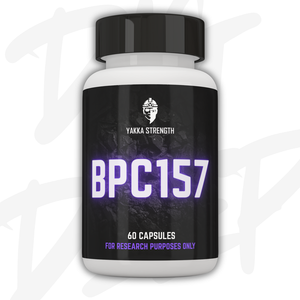
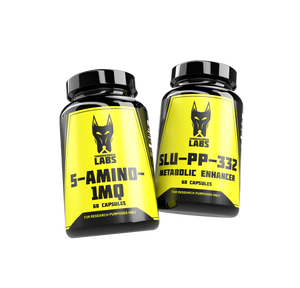
Same compound, other brands See all 3 →
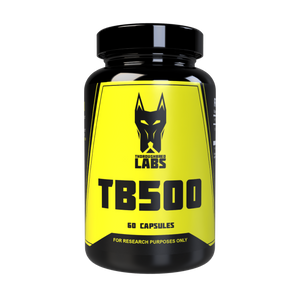
More from Thoroughbred Labs See all 9 →
Supplied for laboratory and research use. Not for human consumption. Not an approved medicine, and nothing above is dosing advice. You must be 18 or over to order.