iMuscle Cardarine GW-501516 + Ligandrol is a two-compound bundle from iMuscle that pairs Cardarine (GW-501516) with LGD-4033 (Ligandrol), 60 capsules in total. iMuscle does not state the strength of either compound and we do not guess at it. The bundle simply offers both in one listing; we make no claim that the two do anything together. Supplied for laboratory research only, not for human consumption, to adults aged 18 and over.
Nothing here suggests they be studied or used together.
About the compounds in this bundle
Cardarine (GW-501516)
Cardarine, also written GW501516 or endurobol, is a synthetic PPAR-delta agonist developed by GlaxoSmithKline and Ligand for lipid disorders; it is not a SARM. A 2012 twelve-week human trial in 268 subjects with low HDL cholesterol recorded a rise in HDL and a fall in triglycerides, but was not designed to assess long-term safety (Olson et al., 2012). Clinical development was halted after two-year rodent carcinogenicity studies found tumours in multiple organs. Every brand we stock is on the Cardarine collection page.
LGD-4033 (Ligandrol)
LGD-4033, also called ligandrol or VK5211, is a non-steroidal selective androgen receptor modulator from Ligand Pharmaceuticals. In a 2013 placebo-controlled study, 76 healthy men aged 21 to 50 took LGD-4033 or placebo for 21 days. Lean body mass rose dose-dependently while fat mass did not change significantly; total testosterone, SHBG, HDL cholesterol and triglycerides fell dose-dependently, and free testosterone and FSH fell at the highest level only. Hormones and lipids returned to baseline after the study ended (Basaria et al., 2013). It was never approved. See the LGD-4033 collection page.
How the two compounds differ
Sharing a bundle does not make the two relatives. They bind different receptors, come from different chemical families and sit in different sections of the anti-doping list.
| Property | Cardarine | LGD-4033 |
|---|---|---|
| Class | PPAR-delta agonist (not a SARM) | Selective androgen receptor modulator |
| Receptor | PPAR-delta, a nuclear receptor governing fatty-acid oxidation genes | Androgen receptor, the receptor testosterone activates |
| CAS number | 317318-70-0 | 1165910-22-4 |
| Formula and molecular weight | C21H18F3NO3S2, 453.5 g/mol | C14H12F6N2O, 338.25 g/mol |
| Stereocentres | None | Two, marked (2R) and (1R) in the systematic name |
| Published human data | Lipid trials in people with low HDL cholesterol | One 21-day placebo-controlled study in healthy men |
| Why development stopped or stalled | Tumours in two-year rodent studies | Not approved; no long-term human data published |
| WADA section | S4, hormone and metabolic modulators | S1, anabolic agents |
Nothing summarised above is a claim about this product, and no published study has examined these compounds together.
This listing
- Brand: iMuscle
- Compounds: Cardarine (GW-501516) and LGD-4033 (Ligandrol)
- Form: capsules
- Pack size: 60 capsules in total across the bundle
- Strength per compound: not stated by the manufacturer
- Bundle basis: two compounds in one listing; no combined effect is claimed
- Use: laboratory research only, not for human consumption, adults 18 and over
With no stated strength, total milligrams per pack cannot be calculated and we do not estimate it. The single-compound iMuscle listings carry a label strength; see price per milligram.
Cardarine and LGD-4033 in the UK: buying, legal status and what to check
Two questions come up most often about these compounds in Britain: whether they can be bought lawfully, and how one listing can be told apart from another.
The legal position for each compound
Neither Cardarine nor LGD-4033 is a licensed medicine in the UK (MHRA) or an authorised food supplement, so neither may be sold for people to take. They are not controlled drugs under the Misuse of Drugs Act 1971 and may be sold to adults for laboratory research, the only basis for this listing. Free Muscle gives no directions for use with either. Both are on the WADA Prohibited List, Cardarine under S4 (hormone and metabolic modulators) and LGD-4033 under S1 (anabolic agents), and are banned in tested sport at all times. Background: What are SARMs? The 2026 research guide.
Why the label alone settles nothing
Both compounds in this bundle turn up in the best-known analysis of products sold online. In 2016, researchers working with anti-doping laboratory methods bought 44 products marketed as SARMs (Van Wagoner et al., 2017). LGD-4033 was one of the three SARMs they detected, in the 23 products that contained any SARM. GW501516 was among the other unapproved drugs found in 17 further products. Four products held no active compound, eleven held substances not listed, and only 18 of the 44 contained the amount their label stated. For a two-compound bundle, that means two separate claims to confirm, not one.
What a checkable listing shows, and how this one compares
- A named manufacturer and a named UK seller. Met: iMuscle makes the bundle, and FreeMuscle LTD, a UK company in Scunthorpe, sells and dispatches it.
- A stated strength for each compound. Not met: iMuscle states none, so we quote none.
- A certificate for each lot held. Shown only where iMuscle supplies one for the batch we hold; see the certificate section below.
- Research-only terms. Met: no amounts, schedules or outcome claims, adults aged 18 and over.
- Traceable, discreet delivery. Met: every UK order goes free and tracked in plain packaging.
- A way to send it back. Met: any unopened item can come back within 30 days, as set out on the delivery and guarantee pages.
Star ratings and forum threads record delivery experiences, not capsule contents. A longer checklist is in how to choose a SARMs supplier in the UK.
Capsules compared with other forms
Both compounds are also offered as liquids and loose powders. The molecule does not change with the format; what changes is where the quantity per unit is fixed, and so what a certificate can vouch for.
- Capsules, as here. Powder is blended and portioned into shells before sealing, so the amount is set once, at manufacture, and an assay can report it directly. The unknown is how evenly the blend was mixed, since a single assay reports an average across the capsules sampled.
- Liquids. Sold by concentration, so every portion depends on measuring a volume accurately. A solution opened often can lose solvent and grow stronger.
- Powder. Nothing is portioned in advance, so accuracy depends wholly on the balance and the person weighing.
Injectable versions of either are sometimes listed, but no human study we can cite gave either compound by injection; the 2013 LGD-4033 study describes it as an oral compound in its title. Neither is a peptide. At 453.5 and 338.25 g/mol they are small synthetic molecules, so the argument that digestive enzymes break down swallowed peptides does not apply to them in the same way (see do oral peptides work). For this bundle, the capsule format's main strength, a stated figure per capsule that can be checked, is absent because iMuscle states none.
Each compound compared with its most-searched alternative
A bundle has no single comparison, so each compound is set against the one it is most often searched with: "stenabolic vs cardarine" and "LGD 4033 vs RAD 140".
Cardarine compared with SR9009
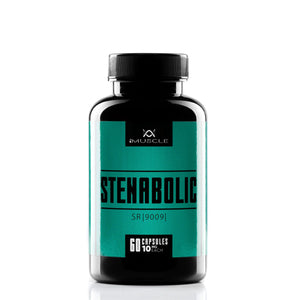
SR9009, sold as stenabolic, is often treated as a sister compound of Cardarine, but the resemblance is commercial, not chemical. SR9009 (C20H24ClN3O4S, CAS 1379686-30-2) binds REV-ERB alpha and beta, receptors in the circadian clock, whereas Cardarine binds PPAR-delta. SR9009 came from an academic laboratory at the Scripps Research Institute and was first described in 2012 in mouse work; it has never entered a clinical trial, so it has no human lipid data like Cardarine's and no published two-year carcinogenicity studies either. That second gap is missing information, not reassurance. Neither is licensed anywhere; WADA lists both under S4. SR9009 brands are in the SR9009 collection, with background in the SR9009 research guide.
LGD-4033 compared with RAD-140
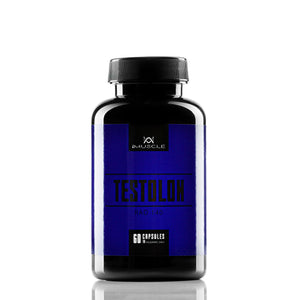
RAD-140 (testolone, vosilasarm), from Radius Health, is like LGD-4033 a non-steroidal SARM that activates the androgen receptor and was never approved. Their clinical records point in different directions. LGD-4033 was given to healthy young men for three weeks with body composition and hormones among the outcomes. RAD-140's first-in-human phase 1 study enrolled 22 postmenopausal women with ER-positive, HER2-negative metastatic breast cancer to establish safety and a maximum tolerated level; raised liver enzymes (AST in 59% and ALT in 45%) were the most frequent adverse events (LoRusso et al., 2022). No trial has compared them, so claims that one is stronger rest on anecdote. WADA names both in section S1.2. RAD-140 brands are in the RAD-140 collection, and its trial is covered in RAD-140 (testolone): what the research says.
Reading the certificate of analysis for this product
iMuscle is a third-party brand, so any certificate of analysis is the manufacturer's. We show one only where iMuscle supplies it for the batch we hold; a bundle may draw on a separate batch per compound, so ask for each by compound name. A generic PDF with no batch number is not a batch certificate. Free Muscle-brand batches are assayed by Janoshik Analytical, an independent laboratory, with the certificate sent on request by email; that programme does not cover iMuscle. See lab tests.
Because the bundle holds two compounds, expect two identity results, normally on two certificates. Read each against these points:
- Name and CAS number. 317318-70-0 for Cardarine and 1165910-22-4 for LGD-4033. A heading of only "SARM" does not say which molecule was found.
- Identity method. HPLC compares the sample's retention time with a reference standard. LC-MS adds a measured mass, which should match the molecular formula: a monoisotopic mass of about 453.07 for Cardarine and 338.09 for LGD-4033, usually seen as an ion about one mass unit above or below. Without an identity result, a purity figure could describe some other substance.
- Isomer, for LGD-4033 only. Its two stereocentres mean other isomers share its formula and mass, so a mass match alone does not prove the right form. Cardarine has no stereocentre, so the point does not arise for it.
- Purity percentage. Usually a share of the total HPLC peak area: how much of what was detected is the named compound. It does not give milligrams per capsule.
- Content per capsule. For most listings this tests a label claim. Here there is no label claim, so a measured figure would be the first statement of strength rather than a check on one.
- Batch number, test date and laboratory. The lot must match the container, the date shows the age of the result, and a named laboratory can be asked to confirm the report.
A missing field leaves its question open. Contact us with the lot numbers and we will tell you what documentation exists. See also how to read a certificate of analysis.
Detection, sport and testing
Both compounds are banned in and out of competition. GW-501516 has been on the WADA list since January 2009, first categorised as a gene doping substance and now in section S4 (Thevis et al., 2010). LGD-4033 is named in section S1.2 among other anabolic agents. Anti-doping rules apply strict liability, so an athlete answers for any prohibited substance in a sample however it got there, and the 2017 analysis shows that a product's label is no guide to what it holds.
Testing for Cardarine targets what the body makes of it as well as the parent molecule. The Cologne anti-doping laboratory synthesised the two main urinary metabolites, a sulfoxide and a sulfone formed at the sulphur atom, confirmed their structures and validated a routine urine screening method with a limit of detection of 0.1 ng/ml (Thevis et al., 2010).
No verified study we can cite gives a detection window after capsules such as these, whose strength is not even stated. For both compounds the accurate statement is: detectable, window not established. The absence of a published window is not evidence that it is short.
Storage, stability and handling
We know of no published shelf-life study for Cardarine or LGD-4033 capsules, so we quote no shelf life. The expiry date printed by iMuscle is the working limit, and a certificate describes a batch only on its test date.
- One compound, one container. Keep each compound in its original labelled container. Capsules can look alike, and once mixed or decanted they can no longer be traced to a lot number or certificate.
- Cool, dry and dark. A closed cupboard away from radiators, ovens and sunlit windows, with lids closed after every opening. Damp air softens capsule shells, so kitchens and bathrooms are poor choices.
- Keep a log. Write the two lot numbers in a notebook with the dates each container was first opened; any portion sent away for testing needs its own tag naming compound, lot and date.
- Laboratory practice. Gloves for opened capsules, no food or drink nearby, storage out of reach of children and pets, and disposal as chemical waste under local rules, not in household bins or drains.
A sealed container keeps its 30-day return option; once opened, it no longer qualifies.
Glossary
- PPAR-delta: the delta member of the peroxisome proliferator-activated receptor family; Cardarine is a synthetic ligand of it.
- Androgen receptor: the receptor testosterone activates, and the target of LGD-4033.
- SARM: selective androgen receptor modulator; LGD-4033 is one, Cardarine is not.
- SHBG: sex hormone-binding globulin, a blood protein that carries testosterone and fell in the 2013 LGD-4033 study.
- Carcinogenicity study: a toxicology test in which rats or mice are exposed for most of their lifespan and examined for tumours.
- Stereocentre: an atom allowing two mirror-image arrangements; LGD-4033 has two, Cardarine none.
- HPLC and LC-MS: separation of a dissolved sample on a column, read by a UV detector or by a mass spectrometer that also weighs each molecule.
- Metabolite: a substance the body makes from another, such as Cardarine's sulfoxide and sulfone.
- Limit of detection: the smallest amount per millilitre a validated method can distinguish from a blank.
- Strict liability: the principle under which the presence of a banned substance in a sample is itself the violation, regardless of intent or how it got there.
Related
- Cardarine (GW-501516), all brands
- LGD-4033 (Ligandrol), all brands
- iMuscle brand collection
- All bundles
- Cardarine (GW-501516): what happened in development
- LGD-4033 (ligandrol): the research guide
Research use only. Not evaluated by the MHRA, EMA or FDA, not a food supplement, not for human consumption. Sold to adults aged 18 and over. Nothing on this page is medical or dosing advice or a suggestion that the compounds be combined.
References
- Olson EJ, et al. Lipid effects of peroxisome proliferator-activated receptor-delta agonist GW501516 in subjects with low high-density lipoprotein cholesterol: characteristics of metabolic syndrome. Arterioscler Thromb Vasc Biol. 2012;32(9):2289-94. PMID: 22814748.
- Basaria S, et al. The safety, pharmacokinetics, and effects of LGD-4033, a novel nonsteroidal oral, selective androgen receptor modulator, in healthy young men. J Gerontol A Biol Sci Med Sci. 2013;68(1):87-95. PMID: 22459616.
- Van Wagoner RM, et al. Chemical Composition and Labeling of Substances Marketed as Selective Androgen Receptor Modulators and Sold via the Internet. JAMA. 2017;318(20):2004-2010. PMID: 29183075.
- Thevis M, et al. Characterization of two major urinary metabolites of the PPARdelta-agonist GW1516 and implementation of the drug in routine doping controls. Anal Bioanal Chem. 2010;396(7):2479-91. PMID: 19946680.
- LoRusso P, et al. A First-in-Human Phase 1 Study of a Novel Selective Androgen Receptor Modulator (SARM), RAD140, in ER+/HER2- Metastatic Breast Cancer. Clin Breast Cancer. 2022;22(1):67-77. PMID: 34565686.
Frequently asked questions
Are Cardarine and LGD-4033 meant to be used together?
No such claim is made. This bundle simply groups the two compounds in one listing. We do not state or imply that they act together, and no published research has studied them in combination. Everything in the bundle is supplied for laboratory research by adults, not for human consumption, and we do not provide guidance on combining or using research compounds.
What strength are the capsules in this bundle?
iMuscle does not state the milligram strength of each compound on this bundle, so we do not list one and cannot calculate a total per pack. The pack holds 60 capsules in total. If a known label strength matters to your comparison, the single-compound iMuscle listings state one, and a batch certificate of analysis is the only document that confirms it.
Is it legal to buy Cardarine and LGD-4033 in the UK?
Neither compound is a controlled drug in the UK, so adults may buy them for laboratory research, which is the basis of this listing. Neither is a licensed medicine or an authorised food supplement, so neither can be sold for human consumption. Both are prohibited in sport under the WADA list and are detectable in anti-doping tests.
Why was Cardarine development stopped?
GlaxoSmithKline halted clinical development of GW-501516 after two-year carcinogenicity studies in rats and mice found tumours in multiple organs. The human trials that had been completed were short lipid studies not designed to detect long-term harm. This is the most important published fact about the compound and the reason it is sold for laboratory research only.
How is the bundle shipped, and can I return it?
Every order has free tracked UK delivery in plain packaging. Orders placed before 2pm Monday to Friday are processed the same working day, and EU delivery takes 3 to 7 working days. Unopened items can be returned within 30 days; opened items no longer qualify. Customers must be aged 18 or over. Full terms are on our delivery and guarantee pages.
Is Cardarine a SARM or a peptide?
Neither. Cardarine (GW-501516) activates PPAR-delta, not the androgen receptor, so it is not a SARM, and it is a small synthetic molecule of about 454 g/mol rather than a chain of amino acids, so it is not a peptide. LGD-4033, the other compound in this bundle, is a SARM. WADA lists Cardarine as a metabolic modulator under section S4.
What is the difference between LGD-4033 and RAD-140?
Both are non-steroidal SARMs that activate the androgen receptor, and neither has been approved anywhere. LGD-4033 was studied for 21 days in healthy men; RAD-140's published phase 1 study enrolled women with metastatic breast cancer, where raised liver enzymes were the most frequent adverse events. No trial has compared them directly. Both are prohibited under WADA section S1.2 and both are sold here for laboratory research only.
What is the half-life of LGD-4033?
The 2013 placebo-controlled study in 76 healthy men reported that LGD-4033 had a long elimination half-life and showed dose-proportional accumulation with repeated administration. Its abstract gives no figure, and we do not quote one from unverified sources. This is a pharmacokinetic finding in trial volunteers, not guidance of any kind, and the compound is sold for research only.
Do you publish dosage, cycle or before-and-after results for Cardarine or LGD-4033?
No. Questions about amounts, timing, cycles or before-and-after results ask how the compounds act in people, which a research supplier cannot answer. We publish no amounts, schedules, cycles, stacks or result claims, and user reports online are unverified. Both compounds are sold for laboratory research only, to adults aged 18 and over, and are not for human consumption.
Are Cardarine and LGD-4033 UK reviews reliable?
Reviews and forum threads report what individual writers say they experienced, not what their product contained, and none is verified. A 2017 analysis of 44 products sold online as SARMs found that only 18 contained the amount their label stated. The document that speaks to a container's contents is a batch certificate, which for iMuscle is shown only where the manufacturer supplies one.
Related research and listings
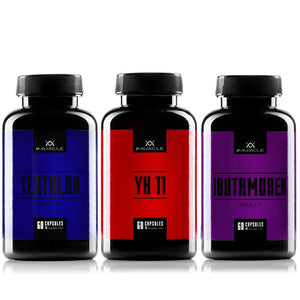
- Related collections: Ostarine (MK-2866), SLU-PP-332, YK-11
- Research guides: Ostarine (MK-2866): what the clinical trials found and UK status; SARMs Explained: How Selective Androgen Receptor Modulators Work; What Is Janoshik Analytical? Third-Party Testing Explained; SLU-PP-332 and 5-Amino-1MQ: what the mouse data show
More from iMuscle See all 17 →
Supplied for laboratory and research use. Not for human consumption. Not an approved medicine, and nothing above is dosing advice. You must be 18 or over to order.